The Devil’s Rejects appears in an aspect ratio of 1.85:1 on this Blu-ray Disc. Within the movie’s stylistic choices, the image worked fine.
Overall sharpness satisfied. Wider shots could lean a bit soft and photographic choices added to this thanks to the film’s stab at 1970s styles but the movie usually appeared pretty accurate.
No issues with jagged edges or shimmering materialized, and I saw no edge haloes. Grain appeared natural – albeit heavy – and outside of a few small specks that may’ve been a “period” choice, print flaws remained absent.
Colors went mainly with a mix of aqua and amber/orange. These seemed well-executed in terms of design choices.
Blacks felt dark and firm, while low-light shots brought appealing clarity. Given the flick’s cinematic choices, the presentation satisfied.
I also felt pleased with the well-executed DTS-HD MA 5.1 soundtrack of Rejects, as it brought spark to the proceedings. Music used the spectrum well and effects fleshed out moments in an appealing manner.
Rejects gave us a lot of violent action, and the soundscape ensured that these scenes utilized the channels in an involving way. The track blended well and added to the movie.
Audio quality worked fine, with speech that remained concise and distinctive. Music showed nice range and punch.
Effects boasted solid accuracy and power as well. This wound up as a very good soundtrack.
When we head to extras, we find two separate audio commentaries. The first comes from writer/director Rob Zombie as he provides a running, screen-specific look at story/characters, sets and locations, cast and performances, editing and deleted scenes, stunts and action, music and effects.
If you heard Zombie’s chat about House of 1000 Corpses, you’ll know what to expect here. Like that one, this piece becomes a mix of downs and mainly ups.
On the negative side, Zombie too often just narrates the movie. However, he also gives us plenty of insights related to the production, and since those moments dominate, they make this a pretty enjoyable discussion.
For the second commentary, we hear from actors Sheri Moon Zombie, Bill Moseley and Sid Haig. All three sit together for a running, screen-specific view of characters and performances as well as some notes about the shoot.
Don’t expect a lot of insights here, as the actors mostly simply describe the action and joke with each other. Though we find occasional useful nuggets, most of the track seems forgettable.
Video elements follow, and a Blooper Reel fills five minutes, 23 seconds with the usual goofs and giggles. A few interesting moments arise but most of the content brings the same old same old.
Next we find a mix of segments that played as part of the film. We see The Morris Green Show (13:20), Mary the Monkey Girl (1:10), Spaulding Christmas Commercial (1:09), Banjo & Sullivan TV Commercial (1:06) and Cheerleader Missing – Otis Home Movie (0:57).
Of these, “Green” becomes the most interesting, as it lets us watch a lot more of the TV host played by Daniel Roebuck. The others seem more superfluous, though “Banjo” provides some amusement.
An archival piece that also pops up in the movie, we get a TV performance of “Satan’s Got to Get Along Without Me” from Buck Owens. It sounds crackly but it still turns into a decent addition.
11 Deleted Scenes occupy a span of 13 minutes, 17 seconds. Given that Rejects already runs too long, I expected these sequences to seem even more unnecessary.
And I predicted right, as we largely find a bunch of padding without much purpose. We do see a quick turn from Rosario Dawson as a nurse, though, as part of an excised “Dr. Satan” storyline.
A collection of makeup tests occupies 13 minutes, 10 seconds and brings silent footage that shows various looks for the actors. The reel seems forgettable.
A Matthew McGrory Tribute lasts two minutes, seven seconds and salutes the actor who died prior to the release of Rejects. We hear on-the-set remarks from McGrory himself and this acts as a decent homage.
Bloody Stand Up goes for two minutes, 23 seconds and features Brian Posehn as he tells jokes in character – and in gory makeup. It provides mild amusement at best.
After this we find a Comic Book Preview (2:23). It just advertises a circa 2005 graphic novel so don’t expect anything interesting.
An EPK Featurette lasts four minutes, 27 seconds and involves Rob Zombie, Sheri Moon Zombie, Haig, Moseley, producer Andy Gould, special effects makeup artist Wayne Toth, and actors William Forsythe and EG Daily. It provides basic promo fodder, though we get a few good shots from the set.
Called Day 8, another featurette occupies five minutes, 13 seconds and provides behind the scenes footage taken on the eighth day of the production along with some comments from Rob Zombie, stunt coordinator Kane Hodder, director of photography Phil Parmet, and actors Lew Temple and Geoffrey Lewis. It offers a brief but interesting view.
Along with six trailers and three TV spots, we get a Soundtrack CD Promo. The movie ads are decent but the CD clip seems like a waste of time.
Finally, a Still Gallery delivers a running montage of 115 photos from the production. These offer a nice array of images, though I could live without the intentional degrading to make them “look old”.
Rob Zombie’s second feature film, The Devil’s Rejects shows no improvement over his amateurish debut. Basically a lot of violence and nastiness costumed as an actual movie, it might satisfy grindhouse buffs but that’s about it. The Blu-ray brings very good picture and audio along with a long roster of supplements. This winds up as a quality release for a bad film.
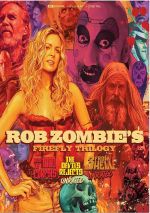
Note that this particular Blu-ray comes as part of a three-movie “Firefly Trilogy” set along with 2003’s House of 1000 Corpses and 2019’s 3 From Hell. While the Blu-rays for Corpses and Hell replicate the BDs as first put out by Lionsgate, this Rejects does not represent the version originally released in 2006.
I can’t figure out for certain when this remaster was created and where – if anywhere – it appeared previously or if it can be purchased on its own, though I think it popped up paired with a 2025 4K UHD release. Whatever the case, it clearly brings a picture scan and an audio track that differs from the 2006 BD.
Also note that “Firefly Trilogy” includes additional bonus materials related to Rejects that I don’t discuss here, as I wanted to focus solely on the movie platter. Those will become the subject of an additional review that concentrates on the “Trilogy” box as a whole.