Reviewed by Colin Jacobson (March 2, 2026)
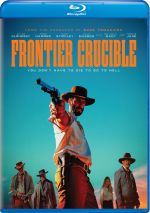
According to a blurb on the Blu-ray’s case, 2025’s Frontier Crucible comes “from the producer of Bone Tomahawk”. As ads go, that’s an improvement over “from the studio that brought you…”, I guess.
Still, it doesn’t inspire a ton of confidence. Nonetheless, I thought I’d give the Western a look.
In the Arizona territory circa 1874, a wagon that contains medical materials needs to go through hostile domains. Merritt Beckford (Myles Clohessy) gets the assignment to conduct this operation on his own.
Along the way, Beckford encounters outlaws Mule (Thomas Jane), Edmund (Armie Hammer) and Billy (Ryan Masson) as well as Valerie (Mary Stickley) and her severely wounded husband Jeff (Eli Brown). Beckford takes them along for the ride as they encounter a mix of challenges.
As noted at the start, the movie’s “from the producer of…” tag didn’t give me tremendous confidence that Crucible came with much to offer. However, a look at the credits brings a more ominous sign.
Crucible mentions that it adapts a novel called Desert Stake-Out by Harry Whittington. However, it lacks a mention of the screenwriter.
Apparently S. Craig Zahler – the director of Bone Tomahawk - wrote the script for Crucible. I can’t find out why Zahler didn’t take a formal credit but generally when someone doesn’t want their name attached to a project, they distance themselves for a good reason.
Usually it means the person involved simply doesn’t want a bad film on their “permanent record”. If so, I can’t quite figure out why Zahler didn’t want an official connection to this movie.
Not that this means I think Crucible musters a strong Western. At best, it becomes a competent piece of work.
Actually, the screenplay becomes one of the weakest links here, largely thanks to the dialogue. The characters find themselves forced to spout painfully mannered and stylized lines at times.
Much of Crucible feels like an obvious homage to classic Westerns of the 1940s and 1950s, and I suspect these choices relate to that. Unfortunately, what seemed fine within the more theatrical styles of the mid-21st century falls short in the 2020s.
Still, this doesn’t turn into a fatal flaw, even if it means some performances suffer. In particular, Clohessy and Stickley find themselves unable to deliver the lines in a manner other than stilted.
Both feel awfully wooden, and Clohessy underplays Beckford to an extreme. These two look good but they can’t bring personality to their roles.
At least the supporting actors add some spark. In particular, Jane does well as the grizzled older outlaw who tries to balance a form of honor along with self-interest.
On the comeback trail after scandals, Hammer proves suitably oily as the least respectable of the criminals. Don’t expect to see much from William H. Macy, unfortunately, as despite fairly high billing, he only appears briefly at the film’s start.
The actors need to handle more of the load than usual for a Western because this becomes an awfully chatty tale. Much of the film feels like it adapts a stage play since so much of it takes place in restricted locations.
Which seems like a shame because they shot Crucible in Prescott AZ and the legendary Monument Valley. This reflects the apparent homage to the classics from folks like John Ford.
We find some gorgeous scenery, even with the limited array of locations. These add a layer of class to the proceedings.
As a character drama, Crucible musters some intrigue, though it probably goes longer than it should. 124 minutes doesn’t seem like an extended running time, but the film can’t quite generate enough useful content to fill that span.
Still, it never becomes boring. Even though the story evolves at an awfully slow pace, it still brings us a decent exploration of characters and themes.
I wish the end product lived up to the pedigree it pursues. I do find Crucible to become a perfectly watchable Western but it never becomes better than that.