Reviewed by Colin Jacobson (March 25, 2026)
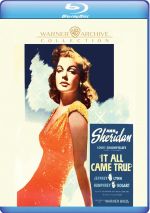
While we now view him as a Hollywood legend, back in 1940 Humphrey Bogart still needed a little more time to consistently earn top billing. With 1940’s It All Came True, Bogart ends up third in the credits, with Ann Sheridan as the name atop the poster.
Old ladies Nora Taylor (Jessie Busley) and Maggie Ryan (Una O'Connor) run a boarding house. Maggie’s nightclub performer daughter Sarah (Sheridan) and Nora’s piano-playing son Tommy (Jeffrey Lynn) end up back home with their mothers.
Former lovers, Sarah and Tommy’s shared past creates angst. Another complication arises when gangster and murderer Chips Maguire (Bogart) moves in hide to from the authorities.
On the surface, that synopsis makes True sound like a mix of 1938’s You Can’t Take It With You and 1936’s The Petrified Forest. Notably, that last one became Bogart’s breakout role in Hollywood, one that also cast him as a criminal.
This shouldn’t imply that True rips off either or both of those flicks, as it comes with plenty of differences. Still, it does feel like it combines the love story and comedic cast of oddballs seen in Take along with the mobster on the lam theme of Forest.
Although True provides occasional entertainment, it can’t balance these genre juxtapositions especially well. As it careens from nutty laughs to thriller to romance, it can fail to mesh in a clean manner.
The comedic side of True fares best, even if some of the elements that revolve around the quirky boarding house inhabitants run too long. We also get stuck with song and dance performances from Sheridan that appears to exist solely to show off her talents, as they don’t fit the rest of the movie.
Still, Bogart appears to relish his chance to create a cheeky twist on his usual gangster. Along with the others, the movie musters some good laughs.
The rest feels less successful. The rekindled romance between Sarah and Tommy seems fairly tepid, and the threat Chips brings to the home doesn’t manifest in a particularly vivid manner.
True manages enough entertainment value to keep the viewer with it across its 97 minutes. However, it sputters too often to become a fully satisfying effort.
Footnote: though I noted that Bogart got third billing for True, he actually pops up second in the film’s opening credits, right below Sheridan and in the same size type. However, the theatrical poster replicated on this Blu-ray’s cover puts Bogart third and in much smaller type than Sheridan, which makes me wonder if the title card shown here got altered after 1940 to reflect Bogart’s increased fame.