DVD Movie Guide @ dvdmg.com Awards & Recommendations at Amazon.com.
.
Review Archive:  # | A-C | D-F | G-I | J-L | M-O | P-R | S-U | V-Z | Viewer Ratings | Main
CRITERION

MOVIE INFO

Director:
Martin Scorsese
Cast:
Leonardo DiCaprio, Lily Gladstone, Robert De Niro
Writing Credits:
Eric Roth, Martin Scorsese

Synopsis:
When oil is discovered in 1920s Oklahoma under Osage Nation land, the Osage people are murdered one by one until the FBI steps in to unravel the mystery.

MPAA:
Rated R.

DISC DETAILS
Presentation:
Aspect Ratio: 2.39:1
Audio:
English Dolby Atmos
English Descriptive Audio
Subtitles:
English
Closed-captioned
Supplements Subtitles:
None

Runtime: 206 min.
Price: $39.95
Release Date: 3/24/2026

Bonus:
• “A Historic Collaboration” Documentary
• "Wahzhazhe" Documentary
• Interview with Director of Photography Rodrigo Prieto
• Cannes Press Conference
• “Cover Art” Featurette
• Trailer
• Booklet


PURCHASE @ AMAZON.COM

EQUIPMENT
-LG OLED65C6P 65-Inch 4K Ultra HD Smart OLED TV
-Marantz SR7010 9.2 Channel Full 4K Ultra HD AV Surround Receiver
-Panasonic DMP-BDT220P Blu-Ray Player
-Chane A2.4 Speakers
-SVS SB12-NSD 12" 400-watt Sealed Box Subwoofer


RELATED REVIEWS


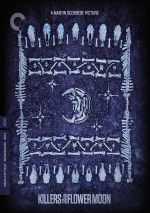
Killers of the Flower Moon: Criterion Collection [Blu-Ray] (2023)

Reviewed by Colin Jacobson (March 8, 2026)

Now in his 80s, 2023’s Killers of the Flower Moon represented Martin Scorsese’s first feature as an octogenarian. Though some older filmmakers struggle in the sunsets of their careers, Scorsese continues to earn praise, as Moon received strong reviews and multiple Oscar nominations.

In the late 1910s, the Native Americans discover oil on Osage territory in Oklahoma. This brings immense wealth to people with little concept of money as well as a slew of opportunists who take advantage of this inexperience.

World War I veteran Ernest Burkhart (Leonardo DiCaprio) joins his scheming uncle William King Hale (Robert De Niro) in these efforts, and Ernest eventually woos and marries Osage Mollie Kyle (Lily Gladstone). In this midst of their relationship, many Osage end up dead under suspicious circumstances, a development that eventually brings Bureau of Investigation Agent Thomas Bruce White (Jesse Plemons) to dig into these occurrences.

As noted, Moon continued Scorsese’s run of critical acclaim. Of his nine 21st century movies, an astonishing seven of them got Oscar Best Picture nominations, and 2006’s The Departed finally earned him that prize as well as Best Director.

While Scorsese continues to generate accolades, I must admit I’ve found his 21st century output to seem inconsistent. Although Scorsese never makes outright duds, none of those nine films from 2002’s Gangs of New York through Moon proves truly satisfying.

I suspect part of the problem stems with Scorsese’s apparent refusal to make movies that don’t boast elongated running times. Of the nine flicks in this 21st century run, a mere two – 2010’s Shutter Island and 2011’s Hugo - clocked in under two and a half hours, whereas in the 1990s, only 1995’s 178-minute Casino went past the 150-minute mark.

Heck, Scorsese’s 21st century flicks average 168 minutes, whereas his 1990s output came with a mean of 141 minutes. Scorsese seems to feel the need to make all his late-in-life efforts “epics”, but that doesn’t mean he uses the time well.

Moon fits snugly with his other more recent flicks. While a quality production that comes with definite positives, it doesn’t manage to become a consistently productive experience.

I don’t want to harp on running times too much, but I can’t help but feel like Moon would’ve fared better at a shorter length. Few movies can fill nearly three and a half hours with compelling material, and Moon fails to use that cinematic real estate to consistent advantage.

The main issue comes redundancy, as Moon makes the same points over and over again. The basic plot remains simple, as the movie focuses on the ways the white men use and abuse the Osage.

A little of this goes a long way, especially because I don’t think Moon explores the core relationship between Ernest and Mollie especially well. They remain at the center of the film, particularly when events lead us to question whether Ernest actually loves Mollie or if he just uses her for the money.

Although Moon explores this, it comes with such scattered focus that it doesn’t dig into the roles as well as it should. Moon comes based on David Grann’s 2017 non-fiction book of the same title, and that one concentrated more on the historical elements than the personal stories.

The cinematic Moon involves real-life people but it takes liberties with their development, and I accept that. I just wish it brought them to life in a more compelling manner.

Even with the film’s extended running time, Scorsese bites off so much that he can’t expand Ernest, Mollie and the rest as well as he should. Not that Moon makes the parts sketchy, but they simply get a bit lost in the shuffle at times.

Despite these negatives, I do think Moon keeps us with it, even if it goes a bit off the rails in the third act. With a protagonist who strikes a deal with the government to go against his former conspirators, this section feels more like GoodFellas that I’d prefer.

Scorsese also makes the perplexing choice to use a vintage radio dramatization format to recap what happened to the main characters after the film’s events. This seems clever-clever and a simple text post-script would’ve felt less jarring and odd.

Still, I don’t want to leave the impression Moon becomes a bad movie, as even though it doesn’t match with Scorsese’s best, it still fares well much of the time. While it paints white men as pretty unscrupulous, it lacks the condescending tone found in movies such as Dances With Wolves, and I appreciate that.

The actors add to the material as well. DiCaprio and De Niro bring typically strong performances, and Gladstone earned her Oscar nomination as Mollie.

Gladstone resists the urge to play Mollie as the simple “noble native” stereotype we find in so many films of this sort and she makes Mollie the only role who goes on a real journey. Ernest starts and ends as a pretty simple criminal dimwit but Mollie evolves, and Gladstone takes her on that journey well.

Ultimately I find many admirable and enjoyable aspects of Moon and think it comes with more positives than negatives. However, the combination of excessive running time and scattershot focus make it less of a success than it could’ve been.


The Disc Grades: Picture A-/ Audio B/ Bonus C+

Killers of the Flower Moon appears in an aspect ratio of 2.39:1 on this Blu-ray Disc. I thought the transfer replicated the source well.

Sharpness worked fine. Softness never became an issue so the film appeared accurate and well-defined.

I saw no shimmering or jaggies, and edge haloes remained absent. Print flaws also caused no concerns.

Moon went with a mix of amber and teal. That was fine for the movie’s visual design, so I found the hues to seem appropriate.

Blacks were dense and deep, and shadows fared well. Low-light shots delivered appropriate delineation and clarity. All in all, this became a satisfying presentation.

Downconverted to Dolby TrueHD 7.1, I also felt pleased with the Dolby Atmos soundtrack of Moon. The soundfield suited the tale, though it didn’t come with a consistent level of engagement.

Music became the most active component, as the score used the various speakers in an involving manner. The movie also came with a good sense of ambience.

Don’t expect too many truly vivid sequences, though. While we got the occasional violent beat, this remained a character film at heart, and that meant a relatively restrained soundscape.

From start to finish, the flick boasted fine audio quality. Speech was crisp and concise, with good intelligibility and no edginess.

Music sounded bright and dynamic, and effects were very strong, as they demonstrated fine clarity and accuracy. Though the mix lacked a lot of “whiz bang”, it nonetheless did what it needed to do.

All the set’s extras appear on a separate Blu-ray disc, and there we open with a documentary called A Historic Collaboration goes for 36 minutes, three seconds. It offers notes from writer/director Martin Scorsese, author David Grann, Osage Nation Principal Chief Geoffrey Standing Bear, Osage cultural consultants Brandy Lemon and John Williams, editor Thelma Schoonmaker, wife of Keeper of Pipe Margaret Shannon-Sisk, Osage cultural, music and language consultant Vann Bighorse, Osage language teachers/translators Christopher Cote and Janis Carpenter, Osage clothing consultant Julie O'Keefe, executive producer Marianne Bower, supervising location manager Mike Fantasia, property master Matthew Cavaliero, costume designer Jacqueline West, production designer Jack Fisk, casting director Ellen Lewis and actors Leonardo DiCaprio, Lily Gladstone, Cara Jade Myers, Yancey Red Corn, Everett Waller, Talee Red Corn, Janae Collins, and Jason Isbell.

The show covers the story's historical background, Grann's book and its cinematic adaptation, attempts at authenticity, cast and performances. While we get some decent insights here, too much of "Collaboration" seems determined to tell us how hard Scorsese and his team worked on authenticity so the end product tends to feel self-congratulatory.

Wahzhazhe spans 33 minutes, 10 seconds. It involves Scorsese, Standing Bear, Williams, musician Scott George, Osage language teacher Tracey Anne Moore, educator Billie Ponca, lawyer Wilson Pipestem, former Osage chief Jim Gray, and healthcare worker Frances Williams.

During this program, we hear more about Osage participation in the film as well as historical elements and work to make the result accurate along with aspects of the film's final scene. Like "Collaboration", this one comes with some useful material but it also leans too heavy on self-praise for authenticity.

An interview with director of photography Rodrigo Prieto lasts 24 minutes, 39 seconds. Taped for the "Dolby Creator Talks Podcast", Director of the Dolby Institute Glenn Kiser chats with Prieto.

The DP looks at his collaboration with Scorsese and his work on Moon. This becomes a solid look at the film's cinematography.

Next we find a Cannes Press Conference that fills 29 minutes, 33 seconds. Hosted by journalist Didier Allouch, the panel includes Scorsese, DiCaprio, Gladston, Standing Bear and actor Robert De Niro.

They look at reactions to the movie's Cannes screening, aspects of the Osage culture depicted in the film and working with the Osage, story/characters, cast and performances, and the impact of COVID on the shoot. We get a mix of decent notes about the flick mixed with the usual praise, so don't expect a lot of substance from the press conference.

Along with the movie's trailer, we find a short reel called Cover Art (1:00) that presents comments from artist Noah Kemohah as he chats about the work he created for the movie's posters as well as this package's case. A promo piece, "Art" seems far too short to tell us much.

The set concludes with a booklet that features photos, credits and essays from critic Vinson Cunningham and filmmaker Adam Piron. It finishes the package on a positive note.

Martin Scorsese’s first film as an octogenarian, Killers of the Flower Moon offers a good but erratic project. While it comes with definite strengths, it runs too long and lacks consistent focus. The Blu-ray boasts excellent picture quality as well as good audio and a mix of bonus materials. Moon keeps us with it but doesn’t match up with Scorsese’s best.


.
Review Archive:  # | A-C | D-F | G-I | J-L | M-O | P-R | S-U | V-Z | Viewer Ratings | Main