Reviewed by Colin Jacobson (September 30, 2026)
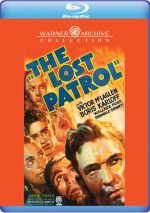
Best known for the Westerns he made with John Wayne, director John Ford branched into other areas as well, of course. 1934’s The Lost Patrol provides one of these efforts.
In the midst of World War I, a British squad crosses the Mesopotamian desert. As this occurs, a sniper manages to take out the commanding officer (Neville Clark).
This leaves the team’s sergeant (Victor McLaglen) in charge. With the enemy all around them and no idea where they are, they wind up barricaded in an oasis as they battle tough odds for survival.
Given that Patrol revolves around soldiers with no clue of their location and no concept of their mission, does it become a stretch to view this as a film with an anti-war sentiment? Maybe, but those themes do seem to speak to the futility of much combat.
This feels especially true given the context of WWI. A conflict where battles occurred without a lot of logic at times, it left a sour taste in the mouths of those who went through it, even if it didn’t actually become the “war to end all wars”.
Whether or not Patrol tries to send a social message, it exists mainly as a “small team who battles the odds” thriller. This clearly will remind viewers of the legendary Battle of the Alamo in 1836.
Ford knew his way around an action scene, and that means Patrol offers a promising project. Unfortunately, it takes its own sweet time to go anywhere.
With a longer running time, the extended set-up period might not create problems. However, Patrol barely spans 72 minutes, and that means the sluggish opening leaves little time for the more dynamic material.
I kind of hate to criticize a movie for its attempts to give us character exposition. Too often we encounter issues in the opposite direction, as too many flicks fail to allow us to truly invest in the parts.
This makes the extended development of the soldiers sounds good in theory. In reality, though, we still barely get to know the roles beyond their most basic elements.
As such, the elongated build-up neither provides us with useful character beats nor creates tension. If we sensed impending doom, this could work.
Instead, Patrol simply malingers as we await the much-needed action beats. It doesn’t help that Ford stages things in an oddly perky way that doesn’t make much sense given the circumstances at hand.
The soldiers seem awfully peppy, and the movie’s jovial score rarely imparts a sense of danger. Even after the sudden threat of snipers arrives, the music remains light.
Matters do pick up in the third act, as that section gives the film more gravity and drama. Unfortunately, it feels like too little too late to redeem this iffy project.