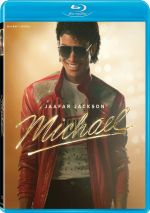
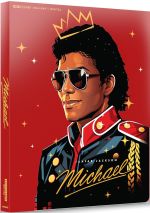
Reviewed by Colin Jacobson (July 19, 2026)
Arguably the biggest pop star in music history, Michael Jackson’s story reached the big screen via 2026’s Michael. Well, viewers got part of Michael’s life, as the film doesn’t cover everything.
In Gary, Indiana circa 1966, eight-year-old Michael Jackson (Juliano Valdi) wants to be like the other kids but his hard-driving father Joseph (Colman Domingo) forces him to work constantly as the lead singer in the Jackson 5, a band that also features his four older brothers. This leads to fame and fortune but not internal satisfaction for Michael.
As an adult (Jaafar Jackson), Joseph continues to run all aspects of his kids’ lives but Michael slowly tries to break away from his control. While Michael turns into a superstar independent of his family, he struggles to become his own man and escape his father’s shadow.
That synopsis probably implies more of a deep character journey than Michael actually provides. While Michael’s desire to break free from his harsh and stern father acts as a general theme, much of the movie progresses like a greatest hits reel of J5 and MJ solo songs.
Some describe Michael as a “jukebox musical” but I don’t think it fits that category. Instead, it exists as a pretty standard career overview biopic with a lot of songs along the way.
Which means not a lot of meat to the proceedings. Sure, Michael’s attempts to stand on his own offer the flick’s throughline, but the flick doesn’t dig into these concepts with real substance.
Joseph never emerges as more than a one-dimensional cartoon villain. Was the real Joseph as reprehensible in real life as the movie version?
Perhaps, but I find it tough to believe those involved couldn’t make him seem at least a little more human than the self-absorbed and domineering Joseph seen here. An actor as good as Domingo gets wasted in such a thin role.
Of the two actors to play our title character, young Valdi offers the more successful performance. He conveys pre-teen Michael’s spirit and attitude better than his adult counterpart.
Did Jaafar get the role mainly because he’s Michael’s nephew? Perhaps, though that seems like a somewhat unfair assessment.
But not entirely unfair, as Michael offers Jaafar’s debut film and he shows little dramatic ability. Not that Jaafar flops when asked to handle the movie’s character elements, but he can’t bring much emotional depth to the role.
Jaafar also bears less of a resemblance to the actual Michael than a lot of viewers seem to believe. When buried in wigs and prosthetics and other effects, Jaafar looks more like Michael, but if you view the two side by side without movie magic, the nephew just fails to demonstrate a real visual connection.
Not that actors need to look just like their characters. However, given how famous Michael was, it seems like more of an imperative, as it becomes tougher to swallow Jaafar as Michael when he shows such a different face.
In any case, a better actor would allow me to ignore the lack of resemblance. While Jaafar seems personable and handles the musical performance aspects of the part, he lacks the skill to pull off the emotional demands.
Such as they are, as Michael remains an awfully superficial overview. As mentioned, the “Michael vs. Joseph” domain adds attempts at drama but they don’t add to up to much in the end.
Michael covers 1966 to 1984, though not in equal measure. Once the J5 become huge stars in the early 70s, the film skips to 1978 so it can focus on Michael’s desire to put out a solo album.
Which the film inaccurately treats as Michael’s solo debut. 1979’s Off the Wall became Michael’s fifth solo album, as he released four at Motown.
Yes, those Motown solo records didn’t give Michael the creative control he’d enjoy at Epic with Quincy Jones in the late 1970s. I suspect the film ignores those albums because they undercut the idea that Joseph doesn’t want Michael to exist outside of the J5.
Who were “the Jacksons” by 1975, another change the film doesn’t deal with in a clear manner. The J5 left Motown but Motown owned the name so they needed to change to “the Jacksons”.
Original member Jermaine Jackson also quit because he wanted to stay at Motown. This meant youngest brother Randy became the newest member.
Bizarrely, Michael never mentions the existence of Randy. It also leaves out oldest sister Rebbie and youngest Jackson Janet, a fact that means many viewers will think there were only six Jackson kids, not nine.
Lots of people complained that Michael didn’t include Janet, but it didn’t need to do so. Janet is the second most famous member of the group and since she became a major pop star in 1986 – ie, after this film’s time frame - she could be a factor in a possible sequel.
Nonetheless, for the story told in Michael, Janet remains completely unnecessary. She had little to do with the exploits of her family in the 1966-1984 period.
On the other hand, Randy seems more important. Granted, the movie really only features the brothers as background – none of them get actual personalities – but given that Randy was a member of the Jacksons for a lot of the film’s running time, it becomes weird that he doesn’t appear.
Apparently Randy, Janet and Rebbie indicated they didn’t want to be featured in the film and the producers agreed. Again, this creates no issues in terms of the absence of Rebbie and Janet, but the movie ignores too much history when it omits Randy.
This leads to a genuinely perplexing scene where Joseph demands the Jacksons tour in 1981 and one of them worries about how they can tour without Jermaine. That’d be the same Jermaine who quit six years earlier and the same Jermaine Randy replaced and the same Jermaine the Jacksons toured without in 1977 and 1979. How could they survive without him?
Sigh.
Not that Michael gives two hoots about the facts of MJ’s life anyway. It creates a lot of “alternate realities” to suit the story it wants to tell.
Which apparently most people don’t notice, but for those of us with knowledge of MJ’s career, these fictitious moments turn into a persistent irritant, especially because the movie often didn’t need to change the facts. The reality is compelling enough so I don’t see the need to alter it.
I won’t bother to detail the inaccuracies because I’d like to wrap up this review before Christmas. Nonetheless, understand that tons of liberties get taken and expect to be annoyed if you know the history.
Despite all these problems, I admit Michael moves at a pretty good pace and keeps us with it. The emphasis on music helps, as even with a thin narrative and one-dimensional characters, the tunes and performances add to the proceedings.
Though moderately entertaining, the flaws of Michael can make it maddening, and not just because it ignores MJ’s controversies. Though we do get a look at MJ’s 1988 Bad Tour to cap the film, the narrative really ends at the December 1984 conclusion of the Victory Tour, and that leaves the seedier aspects of MJ’s life in the film’s future.
I don’t completely get why the producers showed MJ as he performed “Bad” live in 1988. I guess the scene exists to demonstrate MJ’s success post-Jacksons and outside of Joseph’s control, but it lacks context.
If a sequel ever comes to fruition, it will be a tougher sell to audiences. MJ’s career peaked with Thriller so while he enjoyed plenty of success after that, he couldn’t match the same level.
A sequel could pick up in February 1985 with the “We Are the World” sessions and remain on a high with all the success of Bad as album and tour, but then the story gets less positive. The 90s marked a commercial downturn and the emergence of damaging scandals.
So More Michael would lack many of MJ’s biggest hits, confront damning accusations of inappropriate sexual behavior with kids, depict a Michael whose face got less and less human and then end with his death from a drug overdose. Color me doubtful that this movie will ever exist.
Yes, Michael made lots of money, but so did 2018’s Bohemian Rhapsody and that one never brought a second film. Rhapsody ended on a high note for Queen, whereas another movie would conclude with tragedy.
Fans didn’t go to see either Rhapsody or Michael for dark and depressing moments. They wanted rousing musical performances, something that’d be tougher to pull off with More Michael.
If that film eventually emerges, I hope it shows more substance than Michael does. While this one comes to life at times thanks to the music, the superficial view of its subject and the many weird historical liberties make it a flawed flick.