Reviewed by Colin Jacobson (May 31, 2026)
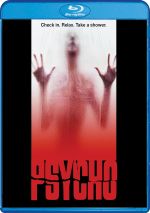
After 1997’s Good Will Hunting became a major financial and critical success, apparently director Gus Van Sant thought “hey, what can I do to immediately harpoon my career?” This led to 1998’s Psycho, Van Sant’s essentially shot-for-shot remake of the 1960 Hitchcock classic.
Phoenix real estate secretary Marion Crane (Anne Heche) loves hardware store owner Sam Loomis (Viggo Mortensen), but his debts interfere with the progress of their relationship. When her boss George Lowery (Rance Howard) leaves a $400,000 pile of cash from wealthy Tom Cassidy (Chad Everett) to hold until she can deposit it at the bank, Marion impetuously decides to steal the money and use it for her own purposes.
As she drives from Arizona to see Sam in California, bad weather forces to Marion stop at an out-of-the-way run by Norman Bates (Vince Vaughn). This doesn’t go well for her.
Van Sant put a bull's eye on his head when he decided to make this picture. Simply remaking Psycho would be bad enough - new versions of classics don't go over very well - but he took this to an extreme in his avowed intention to literally recreate the original film. This wasn't an adaptation of the first movie, as instead it became a (mostly) scene-by-scene reshoot.
In 1998, most people wondered why the filmmakers did this. During his commentary, Van Sant mentions his intentions and they actually seem fairly honorable, as he recognizes the aversion many folks have to watching black and white movies so he hoped that he could make this classic more accessible to a modern audience.
If that's the truth and not just serious spin control, it's a nice gesture, and it actually may have succeeded in a backwards way. Just about nobody went to see Van Sant's movie, so its release and the concordant hubbub certainly renewed interest in Hitchcock's original.
I'm sure many people saw that film for the first time due to the publicity about this one. Since Hitchcock's flick remains a masterpiece, that's a good thing.
As for Van Sant's Psycho, it doesn’t turn into a terrible movie, but it does still seem terribly pointless, Van Sant's altruistic motives to the contrary. Van Sant also states that he did this remake as something of a science experiment, as he wanted to see if by copying the camera shots and the script, would it still be Psycho?
In regard to this film, yes, it still is Psycho, but in the same way that a carefully counterfeited painting still is the Mona Lisa. Yt may dutifully replicate the original, but it ain't art.
While I think that turns into a pretty apt analogy, most frequently Van Sant and the others compare this production to that of the staged play. After all, they reason, if those can be produced with hundreds of different adaptations, then why not a movie?
On the surface, this makes some sense. Van Sant and the rest also bring up other remade movies, and it briefly seems unfair to attack this one while we let the others slide.
However, we find crucial differences. In regard to the "play" comparison, the main problem is that plays are meant to be staged over and over again by different people.
They aren't usually intended to be one time only events and then never performed again. Somehow I don't think Hitchcock or anyone else involved with the original Psycho felt that it would encounter the same fate.
And what about the issue of remakes? The difference between other new adaptations and this one is that others don’t slavishly attempt to replicate their predecessors.
They don't use the original (mildly altered) scripts and they don't study videos of the originals between shots. Normal remakes don't try to perfectly duplicate the originals.
Actually, despite public perception, the 1998 Psycho doesn’t provide a literal shot-by-shot replication of the Hitchcock film, though it comes close. Van Sant removes or alters "outdated" phrases are altered or removed and he adds a little additional gore and
nudity.
We also get to see the lovely sight of Norman as he beats his meat while on Marion. I won't argue whether or not this maintains the spirit of the character - though I don't think it is - but it seems distasteful and pointles nonetheless.
"Pointless" offers a term that seems to come up a lot in discussions of the 1998 Psycho. Ironically, despite Van Sant's best efforts to duplicate the original film, his actors consistently undermine this attempt by almost uniformly altering the characters.
This should be a good thing - at least they tried to give their performances some fresh life - but their interpretations come across as so odd and disparate that it usually feels like each member of the cast exists in a different film.
Take Heche, who clearly seems wrong for the role. Marion should appear sexy and alluring, which Janet Leigh was, whereas Heche tends to seem androgynous and sexless.
Heche certainly isn't ugly, but she lacks the sizzle Marion needs, and another casting miscue connects to that fact. In the
original Psycho, Marion's officemate Caroline (played by Hitchcock's daughter Pat) existed as something of a contrast to Marion.
While Pat was not unattractive at all, she certainly was plain, and that heightened Leigh's glamour-girl looks. This contrast delivers a comedic moment when Caroline mentions that a visiting VIP flirted with Marion and implies that he didn't hit on her because he must have noticed her wedding ring and not because Marion is so much sexier.
That small comic bit gets completely lost in the 1998 Psycho because Rita Wilson plays Caroline here. Wilson’s more attractive and appealing than Heche so the notion that middle-aged men would ignore Caroline and gravitate to Marion now makes no sense.
Casting also the film because then-61-year-old Everett remained very handsome, whereas the 1960 film’s Frank Albertson seemed dumpy at best. A good-looking wealthy guy would clearly attract the attention of much younger women so Everett’s Tom lacks the “dirty old man” tone the rle needs.
This spoils a later scene as well in which Marion imagines the aftermath of her theft and muses that Cassidy would claim she had the hots for him. This was amusing in 1960 because it was clear a babe like Marion wouldn’t be attracted to an unappealing older guy who looked like Albertson, but it doesn’t seem like a stretch to think she’d find Everett sexy.
Heche’s performance also suffers from the actor’s own theatrical tendencies. The woman was born to play comedy and her perfect role would be as someone's wacky sidekick in a sitcom.
As such, Heche simply seems too nutty and silly as Marion. She lacks the haunted, somber quality of Leigh and makes Marion seem like much less of an interesting, unique character.
Next up: Vaughn's conventional take on Bates. By "conventional" I mean that he bases his performance much more on how we commonly think that a nutbag like Norman should behave.
Anthony Perkins played Norman absolutely perfectly. He made him boyishly charming and innocent on the outside and this meant he seemed much creepier when his true nature entered the picture since it came as much more of a surprise.
Unfortunately, Vaughn tips his hand from word one. He comes across as a bizarre giggling nut-job from almost the second he enters the movie.
In the original, we don't question Marion's willingness to spend time alone with Norman because he seems fairly normal despite his lack of social elegance. With Vaughn's Norman, however, you have no idea why Marion would do anything other than run away from him immediately because he has "lunatic" written all over him.
In a way, I feel bad for Vaughn, because he enjoys the least room for success of all the actors. Perkins was simply perfect in Psycho and as such Vaughn probably felt that he needed to do something different, so he made Norman more of an obvious nut. It doesn't work - end of story.
In terms of talent, the remake of Psycho actually boasts a much better cast than the original did. There are some terrific actors here, but they don't do very well in their roles.
Again, this stems from the lack of cohesion - well, and they make some odd choices also. Julianne Moore offers a strange turn on Marion's sister Lila, as she turns her into some sort of macho, militant, man-hating Riot Grrrl.
Funnily, Heche claims during the commentary that she thinks almost no one other than lesbians noticed that Moore's Lila was supposed to be "one of them”. Unless I’m secretly a lesbian, I can say that I recognized this aspect of Moore’s performance immediately.
Odd acting choice number 72: Viggo Mortensen's "aw shucks" cowboy act as Marion's love interest Sam. Why does he play Sam as a cowboy? You got me.
The guy owns a hardware store - what's that have to do with being a cowboy? You got me.
Granted, Mortensen didn't need to live up to a great performance from original actor John Gavin, as his stiff portrayal of
Sam didn't do much to bring the character to life. Still, at least the character made some sense in the Hitchcock film, while Mortensen's Sam just seems confusing.
Ultimately, the 1998 Psycho clearly remains watchable and in a strange way, it can become entertaining. However, it's nothing more than a curiosity, and once you get your fill of that, you won't have much use for the movie.