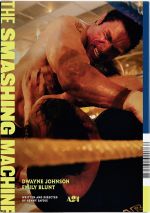
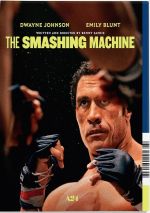
The Smashing Machine appears in an aspect ratio of 1.85:1 on this 4K UHD Disc – well, except for one brief scene shot IMAX 1.43:1. The rest of the movie used 16mm cameras, as choice that left the image good but not great.
Definition seemed pretty good but lacked consistency. Thanks to the 16mm source, most shots seemed fairly concise but the film clearly came with more softness than we’d get from something shot on higher-resolution stock.
No issues with jagged edges or shimmering manifested, and I saw no edge haloes. Grain appeared moderate but natural, and the flick lacked print flaws.
In terms of colors, Machine opted for a fairly orange and teal vibe. The hues showed appropriate impact, with some extra punch from HDR.
Blacks were reasonably deep and dense, while shadows were acceptable. They could be a little murky, but that wasn’t a serious issue. Whites and contrast enjoyed some boost from HDR. Though it looked better than I typically expect from 16mm, that stock nonetheless meant we found a product that didn’t stand out as something that used the 4K UHD format all that well.
As for that one IMAX 1.43:1 sequence, it came at the movie’s very end and lasted a whopping two minutes, 38 seconds. No spoilers related to the content other than to say it presented such a mundane sequence that it felt like an odd choice to use the alternate format.
Of course, this IMAX segment boasted superior visuals to the rest of the film. However, its brevity – and the bland nature of the scene in question – meant that the higher resolution didn’t make an actual difference.
Downconverted to Dolby TrueHD 7.1, the movie’s Dolby Atmos soundtrack proved more impressive. Despite the tale’s character focus, the soundfield opened up in an engrossing manner.
The mix featured dialogue from a variety of spots, and music emanated from all the various channels as well. Effects mostly delivered general ambience, though they kicked into greater action for MMA scenes, and those formed a solid sense of the fights.
Audio quality satisfied, with speech that remained concise and natural. Effects appeared accurate and boasted appealing range.
Music fared best of all, especially thanks to some particularly deep and rich low-end. I thought the mix worked very well for the story at hand.
We get a mix of extras here, and the set opens with an audio commentary from writer/director Benny Safdie. He provides a running, screen-specific look at cast and performances, sets and locations, sound design and music, photography, the documentary style and stabs at realism, editing, makeup effects and related topics.
As I mention in the body of the review, Safdie appears to care much more about nuts and bolts than story-telling, and he concentrates on those domains here. Safdie does dig into the technical aspects of the production well but I would’ve liked more about the rest of the project – and less happy talk as well.
What It Means to Be a Fighter goes for 25 minutes, eight seconds. It brings remarks from Safdie, production designer James Chinlund, costume designer Heidi Bivens, director of photography Maceo Bishop, producer David Koplan, supervising stunt coordinator Greg Rementer, and actors Dwayne Johnson, Emily Blunt, and Bas Rutten.
The show looks at a documentary about Mark Kerr and Johnson’s desire to adapt it as well as how Safdie came to the project and his approach to the material, influences and stylistic choices, characters, cast and performances, sets and locations, makeup and costumes, cinematography, music, and the movie’s MMA segments.
Despite some repetition from the commentary, “Fighter” turns into a fairly good overview. Though it stays a little too oriented toward praise, the expansion of participants’ voices helps it.
Two Deleted Scenes follow: “Bob’s Burgers” (2:38) and “Buddhist Temple” (4:00). “Burgers” shows Mark at a fast food place where he oddly walks up to the drive-thru.
“Temple” lets us see Mark as he shops in Japan and then visits a religious shrine. Both feel utterly superfluous and would’ve simply padded the movie’s run time for little purpose.
Finally, we locate a 16mm Camera Test that runs nine minutes, nine seconds that shows Safdie as he stands in as the Mark character for some scenes. Some commentary would make this reel much more interesting, as the end result lacks much to make it compelling.
Like apparently all A24 releases, this one comes with six Photo Cards that display shots from the film. They seem forgettable.
Dwayne Johnson steps into something more dramatic than usual with The Smashing Machine but he fails to do much with the role. Given the movie’s generally thin characters and lack of real drama, though, I can’t blame him for the film’s lackluster nature. The 4K UHD comes with generally good visuals held back by the stocks used along with surprisingly strong audio and a mix of bonus features. Nothing about this stale drama clicks.