Reviewed by Colin Jacobson (April 1, 2026)
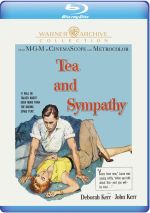
With 1956’s Tea and Sympathy, we get an answer to a trivia question. It became the only time unrelated name-mates Deborah Kerr and John Kerr worked together.
Teenaged Tom Lee (John Kerr) attends Chilton, a prep school for boys. He endures harassment from his peers because he lacks their common interests in sports and girls.
School coach Bill Reynolds’ (Leif Erickson) wife Laura (Deborah Kerr) observes his situation and tries to help. This leads Tom on a journey to deal with his status and all the resultant pressures.
70 years after the film’s release, I suspect Tea exists in the public imagination mainly thanks to one piece of dialogue. "Years from now, when you talk about this -- and you will -- be kind” remains one of the most famous lines in movie history.
Beyond that moment, I can’t find much memorable about Tea. While I appreciate its tale of a boy ostracized because he seems “different”, the movie lacks real substance.
Some of this stems from the era’s “Production Code”. Although Tea does a lot to imply Tom might be gay, the standards of the period meant the film needed to dance around the topic.
Tea adapts a stage play that gives this side of the tale more explicit material. Though both versions make it clear Tom’s straight, apparently the original production got into the accusations of homosexuality in a more blatant manner.
This saps the cinematic Tea of some potential power, as it neuters the basic topic too much. Not that Tom needs to be an alleged homosexual for the themes to work, but it just feels like the movie dances around these issues too much.
Granted, Tom doesn’t need to be a supposed homosexual for Tea to work. The notion of someone who suffers pain because he or she doesn’t quite fit with the “norm” obviously doesn’t need to involve sexuality.
As such, a plot in which Tom deals with animosity from his peers because of his less stereotypically masculine personality could do fine without implications that he’s gay. Unfortunately, Tea seems clumsy and unconvincing as it explores these topics.
Though the 25-year-old John Kerr was too old for the role, he still pulls it off pretty well. He portrays Tom’s awkwardness and insecurity in a satisfying manner.
Deborah Kerr gets less to do with the underdeveloped Laura. It never makes sense that the cultured Laura marries the borderline buffoonish Bill, and Laura ultimately exists as a one-dimensional concept more than as a real character.
Tea also fails to explore its concepts well. We get melodrama without much real impact, and the end result can border on camp at times.
I respect that Tea meant well and seemed progressive for its time. However, it’s not aged well and becomes a watered-down tale of social ostracism.