Reviewed by Colin Jacobson (January 4, 2026)
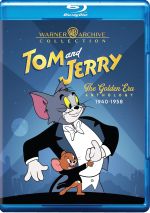
After a debut in 1940, Tom and Jerry’s “classic run” persisted all the way until 1958. Of course, the characters continued to appear in shorts and other formats for decades, but 1958 marked the end of this original stretch via MGM and directors William Hanna and Joseph Barbera.
This encompassed a whopping 114 shorts, all of which appear across five discs in this Blu-ray The Golden Era Anthology set. I’ll look at the cartoons in the order presented here, and I’ll provide plot synopses from IMDB or Wikipedia as well as quick thoughts and ratings on a 1-10 scale.
One note about these numerical judgments: I used these for various Looney Tunes sets as well, but don’t assume an 8/10 or whatever for T&J means I rate that short on the same level as a Looney Tunes 8/10. I don’t like T&J as much as I do Looney Tunes, so rather than end up with more mediocre rankings across the board, I graded this collection on a curve that compared T&J to T&J, not to other franchises.
DISC ONE:
Puss Gets the Boot (1940): “Jasper the cat tries to stop a mouse from breaking plates and glasses before the maid can kick out Jasper.”
Though Tom goes by a different moniker and Jerry goes completely unnamed – albeit known as “Jinx” behind the scenes at MGM - Boot obviously represents Tom and Jerry. Their character designs would change somewhat over the years but this remains unmistakably T&J.
Boot sets up their relationship in an appropriate manner but I can’t claim it delivers a bucket of laughs. Still, it fares reasonably well. 6/10.
The Midnight Snack (1941): “Jerry attempts to outsmart Tom so he can get a snack from the refrigerator.”
17 months elapsed between Boot and Snack, a duration that makes me suspect the former never intended to launch a franchise. I guess it proved popular and that sparked MGM to bring back T&J in summer 1941.
Tom and Jerry officially get their names here – even if the unfortunately stereotyped Black maid calls the cat “Thomas” – and the short’s title card refers to them by those monikers as well. Otherwise, Snack seems like an average T&J cartoon, as it comes with enough cleverness to entertain but it never quite excels. 6/10.
The Night Before Christmas (1941): “Tom gets to know the spirit of giving when he begins to feel guilty after blockading the front door, trapping Jerry outside in the cold on Christmas Eve.”
Christmas cartoons tend to lean sappy, but to my pleasant surprise, Night largely avoids that trend. Granted, it ends on a sentimental note but it nonetheless uses the holiday setting for some good laughs. 8/10.
Fraidy Cat (1942): “Jerry plays tricks to scare the fur off of Tom.”
Though the content implies Fraidy saw a Halloween release, it actually hit screens in January. It creates an unusual vibe because it so firmly places Tom on the receiving end of the trauma.
Usually Jerry causes trouble for Tom because the cat started it, but here, Jerry takes the sadistic initiative from the get-go. That makes it a nice variation and a fun short. 8/10.
Dog Trouble (1942): “Tom and Jerry team up to stop a dog from mauling both of them.”
Here we get the debut of Spike the bulldog, albeit in unnamed form. He becomes the first animal to appear in a T&J short beyond those two and he would become a regular.
I admit I never loved the Spike character, but I get that the series needed some additional animal roles since just T&J would get stale. Trouble introduces Spike in an appropriate manner and actually prompts T&J to work together for the first time, a novelty that adds life. 7/10.
Puss n' Toots (1942): “Tom tries to woo a female cat.”
As indicated by that synopsis, this one expands the T&J character universe more. “Toots” is the name of the pussy Tom craves.
Like Spike, “Toots” would also become a recurring character of sorts, though the franchise tended to vary her look – and even her name – whereas Spike stayed the same. Anyway, I like that this short shows a different side of Tom, and that makes it enjoyable despite a few racist bits that didn’t age well. 7/10.
The Bowling Alley-Cat (1942): “Tom and Jerry chase each other around a bowling alley.”
Well, there’s a simple plot for you! And no guests this time, as it uses the setting as its novelty.
Which I like, as it’s nice to go back to the basics of Tom vs. Jerry without other characters involved. The short utilizes the location for a series of clever gags and becomes a quality production. 8/10.
Fine Feathered Friend (1942): “Jerry flees from Tom by hiding with a chicken family.”
This brings us back to another new character, though unlike Butch or Toots, I don’t think this one’s unnamed hen became a regular. She adds some spark to the proceedings, at least, as does the barnyard settings. This forms a good but not great short. 7/10.
Sufferin’ Cats! (1943): “Tom competes with an alley cat to see who can catch Jerry first.”
Usually called “Meathead” – though unnamed here – the alley cat mentioned became another semi-recurring role. The sight of two felines who go after Jerry adds a bit of spark to an otherwise standard issue plot. 7/10.
The Lonesome Mouse (1943): “When the housekeeper kicks Tom out of the house after Jerry frames him, the mouse enjoys his freedom without Tom until he gets lonesome.”
In an unusual choice, T&J speak in Lonesome. I don’t know why they allowed this variation here and I don’t know if it’ll recur.
As only the 10th T&J short, it seems clear the franchise remained a work in progress. Honestly, I wish T&J became verbal characters permanently because dialogue creates more opportunities for laughs than we get from the mute roles.
Beyond their speech, Lonesome gets a little edge from the manner in which T&J work together to achieve a goal, even though that echoes Dog Trouble - and also fails to stick, since they return to their status as enemies by the end. Expect a moderately good but inconsistent short. 6/10.
The Yankee Doodle Mouse (1943): “Jerry wages war with Tom from his ‘cat raid shelter’ in the basement.”
Of note, Doodle won the Oscar for Short Subject Cartoons, the first – but not last – time a T&J reel would do so. It also more actively alludes to the then-raging US involvement in World War II more prominently than any of its predecessors.
Lonesome did make a quick reference to Hitler, but Doodle uses the WWII framework in its fight between our leads. This turns creative and lively. 8/10.
Baby Puss (1943): “Nancy dresses up Tom like a baby, prompting Jerry and Tom's feline friends to make fun of him.”
1943’s T&J run wraps with a few new characters. “Nancy” exists as a young girl who treats Tom like a plaything, while “Butch and Topsy” provide his two of his pussy peers who mock him.
That makes Jerry sound nearly superfluous, but the kitty pals don’t show up until about halfway into the short, as the first part depicts the ways Jerry harasses Tom. It seems weird that Butch and the others can speak since Tom doesn’t, and their interaction proves less than dynamic.
Really, the best aspects of Baby come from the ways Tom embraces his inner infant. Those help make this a generally good short. 7/10.
The Zoot Cat (1944): “Tom and Jerry try to impress Toots by wearing a zoot suit.”
“Talking Tom” returns here, though Jerry remains mute. The sight of Tom in a ludicrous hipster outfit delivers some humor but this feels like a one-note short. 5/10.
The Million Dollar Cat (1944): “Tom inherits a million dollars on one condition: he must avoid causing harm to any animal, which Jerry uses to his advantage.”
That doesn’t deliver a novel concept and it seems reminiscent of Boot, the very first T&J short. Still, it becomes fun to see Jerry try to milk his “protected status”, especially since it means Tom attempts to find creative ways to rid himself of the pesky rodent. 7/10.
The Bodyguard (1944): “After Jerry frees Spike from the dog-catcher's truck, Spike promises to protect Jerry from Tom by responding to the sound of a whistle.”
I never loved Spike but Bodyguard uses him well, especially via the ways Tom tries to thwart the canine’s intervention. This results in a fairly solid short. 7/10.
Puttin’ On the Dog (1944): “When Jerry hides in the dog pound, Tom disguises himself as a dog.”
This becomes a pretty basic concept but the short explores it well, especially given the goofy ways Tom attempts to pull off his ruse. Nothing here becomes a classic but the reel uses its possibilities well. 7/10.
Mouse Trouble (1944): “Tom reads a book consisting of tips for catching mice.”
1944 concludes with the second T&J short to take home an Oscar. I don’t think Trouble deserved that honor, as some other 1944 T&J reels fare better.
This doesn’t make Trouble bad but it seems fairly pedestrian. Nothing here seems especially memorable. 5/10.
The Mouse Comes to Dinner (1945): “Tom invites Toots to a dinner party.”
Tom pursues romance again, though the emphasis remains on his attempt to stop Jerry. This actually turns more homicidal than usual, and that gives Dinner a bit of an edge that I like. 7/10.
Mouse in Manhattan (1945): “Jerry takes a trip to Manhattan.”
Though billed as a T&J short, Manhattan exists primarily as a Jerry solo affair. Tom appears briefly at the start and finale of the short but otherwise we fail to see him.
I appreciate the attempt to do something different, but it does feel odd to get a T&J cartoon that essentially omits Tom. Mostly it follows cliché “country bumpkin in the big city” concept and doesn’t go much of anywhere. Toss in an unfortunate glimpse of Jerry in blackface and this one disappoints. 3/10.
Tee for Two (1945): “Tom attempts to play golf but Jerry ruins his fun.”
Ala the bowling short, Tee focuses on the typical T&J dynamics but simply exploits an alternate setting. It brings us some more surreal gags than usual and those give it life. 8/10.
Flirty Birdy (1945): “Tom disguises himself as a female bird to trick an eagle who also wants to eat Jerry.”
This leads down a perverse path when the eagle becomes smitten with avian Tom. Actually, the ooh-la-la side of Birdy becomes less prominent than I expected.
Instead, it mainly concentrates on various violent shenanigans. Expect a decent but unexceptional cartoon despite the weirdness of it all. 5/10.
Quiet Please! (1945): “Spike threatens Tom to keep quiet during his nap, but Jerry constantly makes noise.”
Another one reminiscent of the very first T&J short, the comedy here comes from the ways Jerry pushes the envelope to get Tom in trouble. This doesn’t seem especially memorable.
Quiet became the third straight T&J release to win an Oscar, and as was the case with Mouse Trouble, I can’t help but think its December 22 release date helped because it came out later in the year than its competitors.
As with Mouse Trouble, Quiet provides a more than competent short. It just doesn’t really impress, even though it brings a singing and talking Tom. 5/10.
DISC TWO:
Springtime for Thomas (1946): “Tom falls in love with a new female cat named Toodles so Jerry tries to break them up by sending Tom's frenemy Butch to her.”
Apparently Toodles and Toots are different characters, but potayto/potahto. They serve the same purpose.
Jerry’s motivation here seems intriguing, as he wants Tom to remain romantically unattached because he enjoys their antagonistic antics. Jerry actually plays a smaller than normal role but the end result seems mostly good. 6/10.
The Milky Waif (1946): “Nibbles visits one night and wants some milk, so Jerry tries to steal some from Tom.”
24 cartoons into the existence of T&J and we find another new recurring character: Nibbles. Basically a baby mouse in a diaper, Nibbles is an orphan who attaches to Jerry.
Nibbles brings a new dynamic of sorts, though here he mainly plays as a smaller version of Jerry. Despite the unfortunate sight of both mice in blackface – with the odd decision to make Jerry speak in that context - Waif provides a fairly brisk and lively affair.
Trap Happy (1946): “Tom calls mouse exterminator Butch to get rid of Jerry.”
Given that just two shorts ago Springtime indicated that Tom thrived on his bickering relationship with Jerry, it seems odd that Trap paints the cat as the one who wants to eradicate his rodent foe. Well, no one ever said that animated shorts enjoyed continuity.
It also seems odd that a cat would hire another cat to do his job. That said, I pay another human to clear my house of bugs so I guess not all cats enjoy the same skills.
Anyway, the “two against one” motif echoes Waif, though reversed since we find a pair of felines opposed to a single mouse. Jerry seems a bit more clever than usual and that adds some spark. 7/10.
Solid Serenade (1946): “Tom sneaks up to Toodles' house to sing love songs to her at night.”
Jerry prods Spike – here called “Killer” - into action here because Tom’s performances disturb his slumber. In addition to a Tom who sings and also speaks with an affected French accent, we get some good gags that elevate the short. 8/10.
Cat Fishin’ (1947): “Tom uses Jerry as bait when he goes fishing and deals with watchdog Spike.”
Personally, I doubt fish would find themselves enticed to eat a live mouse, but I’m no outdoorsman so what do I know? Of course, the premise just sets up more violent antics, and it uses this alternate location reasonably well. 7/10.
Part Time Pal (1947): “The housekeeper warns Tom to keep Jerry out of the refrigerator or she'll throw him out, but Tom accidentally gets drunk and befriends Jerry.”
This doesn’t offer the first time our leads found themselves as pals, but it adds a twist since Tom does so “unwillingly”. The sight of a Jerry who tries to protect Tom amuses and brings spark to the proceedings. 7/10.
The Cat Concerto (1947): “Pianist Tom performs ‘Hungarian Rhapsody No. 2’ by Franz Liszt until Jerry breaks up his act.”
Here we get the fourth of that consecutive run of T&J shorts that won the Oscar. 1948’s Tweetie Pie ended that string, though as we’ll see, T&J would return to Academy Awards glory in 1949.
All this short’s action takes place at a piano in an auditorium, and that restricted setting forces the cartoon’s creators to find creativity in other ways. They do so well, as the cat and mouse battle over control of the concert delivers cleverness. 9/10.
Footnote One: Concerto won the Oscar for 1946 even though it enjoyed distribution in April 1947, a month after the ceremony. It got token release in late 1946 to qualify.
Footnote Two: a Looney Tunes short called Rhapsody Rabbit came out nearly simultaneously and seemed extremely similar to Concerto. Both studios accused each other of plagiarism.
And I get it, as the pair echo each other so strongly that it becomes tough to view these overlaps as coincidence. This seems to be an unresolved dispute, though if one studio ripped off the other, I’d vote that Looney Tunes stole from T&J.
As I noted when I reviewed Rhapsody, it depicted Bugs Bunny in an unusually “put upon” fashion, and it also gave him a mouse tormentor. Given Rhapsody feels like a T&J short, it seems logical to believe Looney Tunes borrowed from that franchise rather than vice versa.
Dr. Jekyll and Mr. Mouse (1947): “Tom tries to prevent Jerry from drinking his milk by poisoning it, but his plan completely backfires when the poison transforms Jerry into a monster.”
This allows tables to turn because Jerry enjoys superior strength. While fantastic even by T&J standards, the short explores it concepts in a vivid and amusing manner. 8/10.
Salt Water Tabby (1947): “Tom woos Toodles on the beach.”
The T&J series loved to place the leads in new settings where they could execute the typical battles. Tabby allows for some creativity due to the seaside location but I can’t say it stands out as memorable. 6/10.
A Mouse in the House (1947): “Tom and Butch compete against each other to catch Jerry on the housekeeper's orders.”
It seems a bit odd that the home in which Tom has always lived as the only cat now sports two felines, but again, no one looks to animated shorts for consistent continuity. Butch’s presence exists just for a little violent rivalry, and it manages some laughs along with way. 7/10.
The Invisible Mouse: “Jerry uses ‘invisible ink’ to turn invisible and outsmart Tom.”
Ala Jekyll, this means another short that takes the lunacy of T&J into the realm of fantasy. This kind of feels like an indication that the series’ producers began to run out of ideas.
Nonetheless, Invisible uses its premise in an appealing manner. Jerry exploits his new abilities well and we get laughs along the way. 7/10.
Kitty Foiled (1948: “Cuckoo saves Jerry from Tom.”
For the first time in a while, the T&J franchise introduces a new character. The aforementioned “Cuckoo” presents a small bird who bears what I suspect exists as a resemblance to the more famous Looney Tunes role Tweety.
Not that Cuckoo seems like a clone, and the short pairs him with Jerry in a dynamic manner. That seems like enough to make this a quality release. 8/10.
The Truce Hurts (1948): “Tom, Jerry, and Butch are fed up of fighting each other and call a truce, but the peace falls apart when they fight over a steak.”
Brief ceasefires among the rivals exist as a minor staple of the T&J franchise, so the question becomes whether or not Hurts can bring anything fresh to the concept. Yeah, pretty much.
The involvement of Butch – or Spike – complicates matters somewhat, as we typically find a pair of “pals”, not a trio. Of course, we know this won’t last, but the short explores the alliance in interesting ways. 7/10.
Old Rockin’ Chair Tom (1948): “Tom is briefly replaced by another cat named Lightning.”
We get the first appearance of Lightning here, as he would pop up again sporadically in the future. With Chair, he earns his name due to his amazing speed, but I don’t know if that trait manifests in the later cartoons.
Lightning proves to be something of a jerk, and this prompts Tom and Jerry to unite against him. Of course, these partnerships don’t last – and can seem stale in theory – but Lightning provides an interesting enough character to carry this short. 7/10.
Professor Tom (1948): “Tom tries to teach his kitten student Topsy how to catch mice.”
In alternate form as one of the alley cats, Topsy appeared in an earlier short, but Professor makes him younger and more impressionable. Topsy comes across as a feline version of Nibbles.
This opens some new possibilities that the short explores moderately well. It seems more cute than funny but it’s not bad. 6/10.
Mouse Cleaning (1948): “After a muddy Tom chases Jerry through the house, the housekeeper forces the cat to clean the house, which Jerry tries to sabotage.”
That theme sounds familiar. Indeed, it pretty strongly echoes the plot to the very first T&J short from 1940.
This doesn’t make Cleaning a stale dud. Still, it doesn’t expand its scenario well enough to become better than average. 5/10.
Polka-Dot Puss (1949): “Jerry paints red dots all over Tom's face to trick him into thinking he has caught the measles.”
That approach provides a fairly clever twist. Though nothing special, it comes with some fun moments. 7/10.
The Little Orphan (1949): “Jerry and Nibbles dine on Thanksgiving treats until Tom tries to stop them.”
After a one-year lapse, Orphan returned T&J to Oscar glory. T&J would take home the trophy twice more in the 1950s before that string of victories ended.
As we’ve seen, T&J leaned more heavily into cuteness as the 1940s neared their end, and that trend would intensify in the 1950s. Despite the inherent softness we find from these shorts, Orphan manages some laughs – not Oscar-caliber but not bad. 6/10.
Hatch Up Your Troubles (1949): “Jerry protects a baby woodpecker from Tom until it finds its mother.”
Does that sound like another short that will walk the adorable side of the street? It does.
Like the Topsy and Nibbles cartoons, this means Hatch becomes more cutesy than funny. Still, the shenanigans entertain for the most part. 7/10.
Heavenly Puss (1949): “To save himself from Hell after he dies, Tom must get Jerry sign a certificate of forgiveness within one hour.”
This offers a twist on the usual cat vs. mouse antics thanks to Tom’s desperation. It works pretty well. 8/10.
The Cat and the Mermouse (1949): “Tom chases a mermaid mouse who looks like Jerry.”
This sends our leads back to the beach, but that doesn’t make it a copy of Salt Water Tabby. Mermouse seems more cute than funny, but it comes with some inventive moments. 7/10.
Love That Pup (1949): “Jerry hides with Spike and Tyke so Tom will get in trouble if he tries to catch him.”
Another new character debuts, as this becomes our first glimpse of Spike’s offspring Tyke.
Unsurprisingly, this amplifies T&J’s march toward cartoons that emphasize cuteness over the more “brutal” violence of prior reels. However, Tyke exists more as a plot device than as a character, so his presence doesn’t make the short too “soft”. 7/10.
Jerry’s Diary (1949): “Tom reads through Jerry's diary.”
This premise turns into a lazy excuse to regurgitate scenes from earlier shorts. Boo! 1/10.
Tennis Chumps (1949): “Tom and Butch compete against each other in a game of tennis.”
This feels a bit surreal but the short exploits the setting pretty well. We get a nice array of gags here. 8/10.
DISC THREE:
Little Quacker (1950): “Jerry protects a duckling named Little Quacker from Tom.”
T&J enter the 1950s with a new character: the titular bird. Even if his vocals offer a blatant ripoff of Donald Duck, I like the role and this one offers some charm. 7/10.
Saturday Evening Puss (1950): “After the housekeeper goes out, Tom invites three of his feline friends over for a party with loud music and disturbs a sleeping Jerry.”
We already got a short with a very similar theme. Does Puss bring anything new to this particular table?
Yeah, mainly because the antics become more abstract. Though not a classic, it works. 7/10.
Footnote: at one point, the housekeeper exclaims “excuse me” in a manner that sounds a lot like the bit Steve Martin would do decades later. Coincidence? Probably, but the two sure do seem similar.
Texas Tom (1950): “Tom tries to woo a cowgirl cat.”
Unsurprisingly, Texas offers fairly standard issue T&J simply depicted in an alternate setting. It continues to make its gags looser and more abstract, choices good enough to make it entertaining. 7/10.
Jerry and the Lion (1950): “Jerry promises to return an escaped circus lion to the African jungle.”
In a pleasant surprise, the lion doesn’t give us an adorable urchin. He presents a full-grown creature, though one who seems a little dimwitted.
It feels odd to see Tom suddenly turn into a big game hunter. Still, this one does something a bit different and that makes it worthwhile. 7/10.
Safety Second (1950): “Jerry and Nibbles celebrate Independence Day. Nibbles wants to set off firecrackers, but Jerry would rather play it safer.”
Basically the short exists as a way to bring lots of explosives into the T&J universe. The end result tends to feel one-note and lackluster. 4/10.
Tom and Jerry in the Hollywood Bowl (1950): “Tom conducts the overture of Die Fledermaus at the Hollywood Bowl, but Jerry also wants to conduct.”
Does that sound like Cat Concerto? Yes, it does.
Bowl finds some variations but it still feels like an attempt to replicate the earlier short’s success. This makes it middle of the road in terms of quality. 5/10.
The Framed Cat (1950): “When Tom steals a chicken drumstick and frames Jerry, Jerry gets even by stealing Spike's bone and framing Tom.”
That plot takes things to their basics and lacks the adornment we see with other then-contemporary T&J shorts. It becomes a nice return to that form. 8/10.
Cue Ball Cat (1950): “Tom and Jerry duel in a billiard hall.”
It’s good to occasionally get a short that lacks characters beyond our leads, though the pool hall acts as the “twist”. Enough cleverness stems from that setting to make the cartoon a success. 7/10.
Casanova Cat (1951): “Tom and Butch compete for the affection of Toodles, with Jerry as a pawn.”
Expect a pretty typical look at Tom and Butch as they vie for a little ooh-la-la. Nothing special results but the flick remains moderately entertaining. 6/10.
Jerry and the Goldfish (1951): “Jerry must save a goldfish from Tom.”
This becomes another short with a concept similar to prior efforts. That means it needs to find other ways to stand out from the crowd.
Which it doesn’t – at least not in an dynamic way. Some laughs result but too much of Goldfish emits “been there, done that”. 5/10.
Jerry’s Cousin (1951): “Jerry enlists help from his tough cousin Muscles to deal with Tom.”
This becomes the debut of Muscles, a role that exists mainly because he looks like Jerry and the short thus delivers lots of mistaken identity gags. Nonetheless, it works pretty well and exploits its situations for fun. 8/10.
Sleepy-Time Tom (1951): “After staying out all night with his alley cat friends, Tom attempts to catch Jerry on housekeeper's orders, but he gets sleepy in the process.”
At 28, I could stay out all night and be fine to function the next day. At 58, if I stay up past 10 PM, I can barely deal with the world.
But I’m not a cat so I can’t comment on the accuracy of how this short depicts Tom. Felines sleep all the damned time anyway so I guess it makes sense.
Whatever realism – or lack thereof – we find from the cartoon, it offers something different. That’s no mean feat 58 adventures into the franchise, so I’ll take it. 8/10.
His Mouse Friday (1951): “Tom becomes a castaway on an island and chases Jerry to a native village.”
That location allows for all sorts of unfortunate racial stereotypes. Granted, these abound across the run of shorts we get in this compilation, but Friday pushes this envelope even more than most.
If we can get past these elements, Friday manages some cleverness. It becomes a generally amusing reel. 6/10.
Slicked-Up Pup (1951): “Spike threatens Tom to keep Tyke clean while he is gone so Jerry dirties Tyke to get Tom in trouble.”
That exists as a common theme but Pup makes Jerry seem a little too mean for once. While not a bad short, it doesn’t excel. 5/10.
Nit-Witty Kitty (1951): “The housekeeper accidentally knocks Tom out with a blow to the head which causes him to forget who he is and think that he is a mouse.”
The twist here comes from Jerry’s reaction, as he finds Rodent Tom more annoying than Feline Tom. I like this curveball and the short explores the goofy theme in a delightful manner. 9/10.
Cat Napping (1951): “Tom and Jerry fight over who is going to sleep in the hammock.”
That “plot” makes the short feel like a throwback to early T&J since it comes without gimmicks or extra characters – well, until a brief spot at the end. Though it doesn’t dazzle, it still works fine within that context, and it’s nice to get a simpler cartoon for once. 7/10.
The Flying Cat (1951): “Tom chases Jerry and Cuckoo by devising an aerial plan of attack.”
This becomes our second look at Cuckoo – and our final glimpse of Cuckoo outside of a couple cameos and the use of some rehashed footage in compilation shorts. Will I miss the character?
Ehh, not really, as Cuckoo doesn’t seem like much more than an avian version of Jerry. Perhaps if he’d gotten more exposure, he’d have developed a distinctive personality.
But as shown in his two “starring” shorts, Cuckoo doesn’t go much of anywhere. Still, Tom’s use of artificial wings adds zing to this pretty good reel. 7/10.
The Duck Doctor (1951): “Tom shoots down a wild duckling while hunting. Jerry helps him get airborne again.”
That sounds like a prime spot to bring back Little Quacker, and maybe Doctor does? As mentioned, T&J played fast and loose with continuity, so although this short’s duckling doesn’t look like Quacker, he sounds like him.
I find this bird less charming than Quacker, though, as he seems cute but not as likable. Also, if Tom owns and knows how to work a shotgun, why doesn’t he use it to shoot Jerry?
Unanswerable questions! Whatever the case, Doctor gives us a decent but average short. 5/10.
Smitten Kitten (1951): “Jerry's devil recalls the times when Tom fell in love and caused problems for Jerry.”
This becomes another space-filling short that just compiles clips from older cartoons. No thanks. 1/10.
Triplet Trouble (1951): “The housekeeper adopts three kittens who torment Tom and Jerry, so the two team up to have their revenge.”
We get the introduction of “Fluff”, “Muff” and “Puff”, the aforementioned kittens. They appear to accelerate T&J’s inexorable push toward cutesy content.
To my pleasant surprise, that synopsis proves correct and the kittens act out in borderline evil ways. This brings spark to a short that I feared would seem soft ‘n’ gentle. 8/10.
Little Runaway (1951): “Tom intends to give an escaped seal pup back to the circus, but Jerry wants to help the seal pup escape.”
Cutesy alert, as the adorable seal pushes in that direction. And no bait and switch here, as unlike the kittens, the aquatic mammal boasts no dark side.
The unnamed seal acts as another participant in Jerry’s battles against Tom, and he adds some new tactics. Nothing revelatory occurs but the short does enough to entertain. 6/10.
The Two Mouseketeers (1952): “Jerry and Nibbles are hungry Mouseketeers, and Tom is a guard in charge of protecting the king's banquet.”
The short that returned T&J to Oscar glory, it goes down an unusual path since it places them in an alternate timeline. While it does little to battle against the franchise’s push toward cuter fare, it uses its situations well. 8/10.
Push-Button Kitty (1952): “Fed up with Tom's laziness, the housekeeper buys a new mouse-catching robot cat.”
Where did Tom’s laissez faire attitude toward Jerry come from? This feels like a contrivance just for plot purposes, as Tom always seems highly motivated to harm the rodent.
Uncharacteristic twists aside, Kitty amuses because of this goofy shift. The mechanical – and seemingly unstoppable - nature of the robot gives the short nice flavor. 8/10.
Fit to Be Tied (1952): “After the passing of a new leash law, Tom torments Spike and uses the opportunity to chase Jerry.”
It takes a while to get to that point, though, as much of Tied depicts Spike’s crusade to help Jerry. The dog’s restrictions add some zing to the proceedings and give it enough flavor to bring something new. 7/10.
Cruise Cat (1952): “Tom is hired as a sailor tasked with keeping Jerry off a cruise ship.”
Like many T&J shorts, Cruise uses an alternate setting for the standard cat vs. mouse hijinks. The boat allows for some creativity but the cartoon doesn’t stand out from this crowd.
Cruise also comes with a surreal moment in which Tom and Jerry watch a T&J cartoon - Texas Tom, to be exact. This fills enough time to lose cleverness and feel like a cheap way to fill time, a choice that drops my grade a bit. 5/10.
The Dog House (1952): “Spike decides to build his dream dog house but Tom’s antics constantly destroy it.”
Given that Spike usually acts as the one who torments Tom, it becomes intriguing to see the tables turn to some degree. This adds some spice to the proceedings and allows the short to add some novelty. 7/10.
DISC FOUR:
The Missing Mouse (1953): “After Jerry is covered in white shoe polish, he scares Tom into thinking that he is an explosive white mouse that escaped from a lab.”
Jerry often finds creative ways to torment Tom, and Missing comes up with a fresh twist. While it winds up with a predictable ending, the antics still amuse. 8/10.
Jerry and Jumbo (1953): “Jerry befriends a baby elephant named Jumbo and disguises him as a large mouse to mess with Tom.”
Any similarity between “Jumbo” and a similarly named Disney pachyderm exists as complete coincidence, I’m sure! Uh, yeah.
Jumbo also delivers another role that seems more adorable than funny. Some decent comedy arises but the end product tends to feel a bit stale. 5/10.
Johann Mouse (1953): “As the pet owned by Johann Strauss in Vienna, Tom becomes an accomplished pianist himself after his master goes away in order to lure dancing Jerry out with piano music.”
This turned into the final T&J short to win an Oscar. I guess Academy voters tired of the franchise after 1953.
I can’t claim the cartoon feels “Oscar worthy”, but the setting and context give it creative elements. That seems like enough to turn it into a pretty good reel. 8/10.
That’s My Pup! (1953): “Spike strikes an ‘agreement’ with Tom for the feline to act scared whenever Tyke barks at him.”
Though this synopsis implies Spike and Tom join sides, the cat only participates under duress, and Jerry adds to the torment. I wish the short went with a partnership between cat and dog, as I think that’d feel more original, but it still manages laughs. 6/10.
Just Ducky (1953): “After Quacker hatches, Jerry befriends him and teaches him how to swim so he can find his family, but Jerry must also protect him from Tom.”
It sure seems odd that Quacker emerges from his shell here since we already saw him in an earlier short. Then again, as noted previously, cartoon continuity essentially doesn’t exist.
Whatever the case, I always find myself happy to see Quacker. I should dislike him given his existence as another overtly adorable character, but I just like the dude. Nothing revelatory occurs but the final product works fine. 7/10.
Two Little Indians (1953): “Scoutmaster Jerry takes two young mice on a hiking trip.”
The title comes from the depiction of those baby rodents, as they dress and act like stereotypical Native Americans. It stands as an indicator of how much racism we see across the T&J series that his depiction barely stands out as “politically incorrect” compared to so many of the others.
Boy, we really do find a shocking amount of racism in this run of T&J. Even if we “justify” these tropes via the perspectives of the era, it still seems over the top.
After all, Looney Tunes ran in the same time frame. While those shorts come with plenty of their own now-problematic elements, these pale in comparison to the onslaught from T&J.
Editorializing over. The short uses weapons more than usual but otherwise feels fairly “standard issue” for T&J. 5/10.
Life With Tom (1953): “Jerry writes an autobiography titled Life with Tom”.
Yeah, this becomes another compilation of clips from old shorts. 1/10.
Puppy Tale (1954): “A litter of puppies gets thrown into a river, but Jerry saves them and must deal with one that will not leave him and Tom alone.”
What a horrifying concept! Animal cruelty upsets me to an extreme degree.
If I get past that notion, Tale seems… okay. It becomes another one of those “cute rather than funny” shorts but I do love me some adorable pooches so that kind of saves the day. Tom also shows a conscience and tries to help the pups, so add a point to my grade for that. 6/10.
Posse Cat (1954): “Tom lives with a western rancher who rules that Tom's dinner will depend on him keeping Jerry from stealing their food.”
Once again we get fairly standard antics placed in a semi-novel setting, though T&J have “gone Western” enough that this one doesn’t seem all that creative. I also wonder why Tom can use pistols to shoot an agreement he signs with Jerry but he doesn’t simply use the handguns to kill his foe.
All that aside, Posse still musters some comedy. Nothing impresses but it’s a watchable reel. 6/10.
Hic-cup Pup (1954): “Tom's usual antics give Tyke the hiccups so Spike threatens Tom to keep quiet while Jerry tries to frame him.”
This feels like pretty standard stuff, though the hiccups bring complications. It becomes reasonably clever at times. 7/10.
Little School Mouse (1954): “Professor Jerry tries to teach Nibbles how to outwit cats.”
I like the manner in which Jerry teaches his little one-student class, even if the short eventually becomes more “standard”. The academic setting boasts enough cleverness to make this a quality cartoon. 7/10.
Baby Butch (1954): “Butch disguises himself as a baby to steal food from Tom and Jerry's household.”
This leads to one of the occasional “Tom and Jerry join forces” shorts. I like that theme but I find Butch to offer one of the series’ weaker recurring roles so that leaves this one as spotty. 5/10.
Mice Follies (1954): “Jerry and Nibbles flood the kitchen, freeze it and turn it into a skating rink, causing Tom to use unusual tactics to catch them.”
With Nibbles in tow and an “elegant” setting, Follies inevitably leans cutesy. That said, it uses the skating motif for some clever new gags. 6/10.
Neapolitan Mouse (1954): “Tom and Jerry vacation in Naples and encounter a local mouse named Topo.”
Expect this one to offer fairly standard “Jerry and partner battle Tom” antics in a novel setting. At least T&J never explored Italy previously so this does offer some fresh gags, especially since it hints at the meta concept that T&J exist in cartoons as well as “real life”. 6/10.
Downhearted Duckling (1954): “Quacker feels he’s ugly and even resorts to being eaten by Tom rather than to live with his ‘ugliness’.”
It becomes ironic that the intentionally adorable Quacker thinks he’s hideous. Perhaps the producers intended this as commentary on self-loathing.
But probably not. Quacker’s suicidal sentiments add an unusual dark tone to the short and that makes me like it. 8/10.
Pet Peeve (1954 – 2.35:1): “When pet food gets too expensive, Tom the cat and Spike the dog must compete as mousers. Their owners will allow the one who catches Jerry the mouse to stay.”
Peeve makes Jerry much more passive than the average T&J offering, as he mainly stands by while Tom and Spike compete. Nothing remarkable emerges but a few clever bits arrive. 7/10.
Note that Peeve offers the first of 23 T&J shorts that went with a 2.35:1 aspect ratio. This didn’t encompass all their efforts from 1954 to 1958, though, so I’ll add that little “2.35:1” blurb after the title to mark these.
Touché, Pussy Cat! (1954 – 2.35:1): “Mouseketeer Jerry's old friend François Mouse sends his son Nibbles for training. But when Jerry must save the tyke from a run-in with Tom, the little one is sent packing until he manages to save Jerry.”
Like many T&J shorts, Touché proves more cute than funny. Nonetheless, it still comes with some charms and proves largely enjoyable. 8/10.
Southbound Duckling (1955 – 2.35:1): “Jerry's fowl friend plans to fly south for the winter despite the fact domestic ducks do not fly south – and despite his obvious inability to fly at all.”
On one hand, Southbound loses some points due to derivative factors. In addition to the fact Little Quacker sounds an awful lot like Donald Duck, his stubborn personality seems reminiscent of Henery the chicken hawk from Looney Tunes.
Also, Tom’s participation seems forced, as he adds unnecessary peril to a tale that would work just between Jerry and Quacker. Still, the various elements largely overcome these obstacles to entertain. 8/10.
Pup on a Picnic (1955 – 2.35:1): “Spike takes his son on a picnic. Jerry hides in the basket so Tom disrupts the picnic to chase him.”
Don’t expect a lot of creativity from Picnic, as it relies on pretty standard “cat chases mouse/dog beats up cat” shenanigans. While not a weak short, it seems wholly mediocre. 5/10.
Mouse for Sale (1955): “Tom disguises Jerry to sell him after he sees an ad in the newspaper.”
Boy, it seems like Tom makes a shocking amount of money off the sale of one mouse. Goofy complications thanks to “Joan”, Tom’s human owner who debuted in Pet Peeve.
Joan and husband George came into the franchise due to social awareness that the Black “Mammy Two Shoes” housekeeper finally became too racist to persist. This becomes a welcome change, especially since George and Joan feel more like “1950s characters”.
It never becomes clear why white mice seem so desirable, but who looks to T&J for logic? The short finds some new ways to mess with Tom so it entertains. 7/10.
Designs on Jerry (1955): “Stick figure versions of Tom and Jerry come to life when Tom creates a very detailed blueprint of a mousetrap.”
Well, that sounds original! Not an easy feat 94 shorts into T&J’s run!
Designs manages to exploit its novel premise well. This turns into one of the series’ better shorts. 9/10.
Tom and Chérie (1955 – 2.35:1): “Mousketeer Jerry forces his student to deliver love letters to his darling Lilli, a task that requires the pupil to get past Tom.”
I liked our most recent foray into “Mousketeer Jerry” territory, and despite his overtly cute orientation, I kind of enjoy Nibbles’s appearance, perhaps because he speaks and that adds flavor to the typically dialogue-free antics of Tom and Jerry.
Chérie manages some mirth, though Jerry seems like a bit of a jerk since he refuses to believe Nibbles’s stories of Tom’s threat and he won’t deliver the letters himself. 7/10.
Smarty Cat (1955): “Tom and his pals watch old footage of Spike's misery while the owners are not home.”
Yes, another cheap compilation reel. 1/10.
Pecos Pest (1955): “Jerry's uncle Pecos comes to the city with his guitar for his television singing debut and traumatizes Tom because he pulls the cat’s whiskers to replace broken strings.”
To my surprise, this acts as the one and only appearance of Uncle Pesos. Well, at least he made it memorable, as this one offers a weird and amusing experience. 8/10.
That’s My Mommy (1955 – 2.35:1): “When a duck hatches from the egg underneath Tom, he is convinced the cat is his mother.”
IMDB bills this short’s bird as “Little Quacker”, and he bears the same voice as performed by Red Coffey. Still, the character doesn’t seem similar to the established one in other ways.
Anyway, Mommy seems destined to “go cutesy” based on the plot, but it proves more sadistic than expected, especially since Quacker so gladly accepts all the ways Tom tries to kill/eat him. This perverse streak makes it work. 9/10.
DISC FIVE:
The Flying Sorceress (1956 – 2.35:1): “Tom steals a witch's flying broom so he can scare the wits out of Jerry.”
I appreciate that Sorceress shakes up the usual T&J MO due to the inclusion of its supernatural elements. The witch played by June Foray annoys, but the short’s creativity overcomes this problem. 8/10.
The Egg and Jerry (1956 – 2.35:1): “A baby woodpecker mistakes Jerry for his mother. The mouse rejects the newly-hatched bird but soon must protect it against his feline nemesis Tom.”
Whereas Mommy made Tom the assumed parent of a wayward bird, Egg does the same for Jerry. This creates some similar kinds of comedic beats, though the fact Egg uses a woodpecker instead of a duck – and a feisty woodpecker at that – adds some spark. 7/10.
Note that adapts Hatch Up Your Troubles and just reworks it for the widescreen presentation. It uses the same old animation and plops it on top of expanded backgrounds.
Busy Buddies (1956 – 2.35:1): “Tom and Jerry must take care of a baby because the babysitter spends her time on the phone.”
Given the natural antagonism between T&J, shorts in which they join forces offer a twist. Beyond that, Buddies seems less than stellar, mainly because we already got some cartoons in which Tom or Jerry became unlikely guardians. 6/10.
Muscle Beach Tom (1956 – 2.35:1): “Tom settles in for a day at the beach with his sweetie and accidentally ruins Jerry's day. Tom's girl pays more attention to the bodybuilders than to Tom.”
Two plots means twice the fun? Not really, as Beach seems a bit trite and unfocused. Some laughs result but the end product doesn’t quite click. 5/10.
Down Beat Bear (1956 – 2.35:1): “A dancing bear escapes from a carnival and uses Tom as his reluctant dance partner.”
Expect Beat to offer essentially a one-joke affair that concentrates on shtick related to the bear and Tom. It becomes a decent short but not a memorable one. 5/10.
Blue Cat Blues (1956 – 2.35:1): “As Tom prepares to commit suicide, Jerry recounts the cat's hopeless lover's pursuit of the opportunistic lady that led to this.”
Nothing like a little suicide to entertain the youngsters! Blues stands out in other ways too, as it posits Tom and Jerry as besties and also comes with narration from the mouse.
Though it echoes aspects of Muscle Beach Tom, it feels weird enough to stand on its own. It also comes with a surprisingly grim finale. 7/10.
Barbecue Brawl (1956 – 2.35:1): “Spike shows his son Tyke how to barbecue when Tom and Jerry’s antics interrupt.”
Boy, this franchise really adapted the characters to be whatever they wanted in the moment, didn’t they? Sometimes Spike and Tom are housepets but then Spike suddenly speaks and owns his own home!
Well, no one should ever expect continuity from animated shorts. Brawl feels like it borrows too much from other T&J shorts, especially when it reprises an ant invasion from an earlier reel in this very collection. 5/10.
Tops with Pops (1957 – 2.35:1): “Spike the bulldog warns Tom to keep away from his son Tyke. Jerry realizes that sticking close to the boy is the best way to repel his feline tormentor, but Tom won’t let the mouse evade him so easily.”
Spike and Tyke didn’t rock my world previously so I went into Pops without much optimism. This one retains Spike’s ability to speak English and he still sounds like Jimmy Durante but it makes him a pet again, and that seems like a confusing twist. The short fails to find much to do with its predictable scenarios as well. 4/10.
Timid Tabby (1957 – 2.35:1): “Tom's fraidy cat cousin comes for a visit and Jerry takes advantage of the cowardly feline.”
Why does Tom’s cousin George possess the ability to speak English while Tom remains mute? Oh, the perplexities of the T&J universe!
That oddness aside, Tabby works, mainly because it casts Jerry as the aggressor who deserves comeuppance for once. While predictable in many ways, the short still finds enough cleverness to click. 8/10.
Feedin’ the Kiddie (1957 – 2.35:1): “When Jerry hosts his infant nephew Nibbles, he must keep the gluttonous youngster from Tom’s maw.”
Although Mouseketeer Nibbles could speak, this one remains silent. Perhaps this occurs because Kiddie posits Nibbles as a diaper-wearing infant, though that seems weird since the kid travels on his own.
Again, I attempt logic in this franchise’s topsy-turvy world! Strange choices aside, Kiddie feels fairly meh, mainly because we’ve already gotten other shorts in which an innocent youth must be kept safe. Outside of the holiday setting, this one finds little fresh to bring to the table. 5/10.
Mucho Mouse (1957 – 2.35:1): “Award-winning mouse catcher Tom arrives in Spain to catch the flamenco dancing rodent El Magnifico.”
Expect all sorts of weirdness from Mucho. In addition to its exotic setting, we also get a Tom who can speak – and who tries to muster some Spanish!
Of course, this acts as windowdressing for a pretty standard “Tom tries to capture Jerry” theme. Nonetheless, it becomes good windowdressing that turns into a fun short. 8/10.
Tom’s Photo Finish (1957 – 2.35:1): “When owner George threatens to punish the pet who ate some leftover chicken, Tom – who committed the act – attempts to frame Spike. Jerry uses photography to alter this equation.”
The use of Jerry’s camerawork gives a twist to the standard battle between Spike and Tom – albeit a weird one. Still, the short comes with some decent moments. 6/10.
Happy Go Ducky (1958 – 2.35:1): “Little Quacker hatches out of an Easter egg to spread positive messages to everyone and everything he sees, but keeping him from harm turns out to be a full-time job for Tom and Jerry.”
This seems reminiscent of That’s My Mommy, though neither Tom nor Jerry wish harm upon Quacker in this one. It proves nothing special in most ways, but I like Quacker enough to find entertainment from it. 6/10.
Royal Cat Nap (1958 – 2.35:1): “Tom must oppose The Two Mouseketeers without disturbing the King's sleep.”
Once again, we get fairly typical cat vs. mouse antics with the twist of an unusual setting. Unlike Mucho Mouse, though, this change in situation doesn’t prove especially winning, so the short feels meh. 5/10.
The Vanishing Duck (1958 – 2.35:1): “When Tom attempts to eat a baby duck, the bird and Jerry use vanishing cream to thwart his plans.”
And here comes more Little Quacker! How many times can the same duckling enter the lives of T&J “for the first time”?
No matter – I still greet Quacker with enough goodwill that I don’t mind. I should probably hate the fowl given his cutesy nature, but darn it, I think he adds spark to the usual shenanigans. 7/10.
Robin Hoodwinked (1958 – 2.35:1): “Tom guards Robin Hood's prison cell while Jerry and Nibbles intend Robin's rescue the hero.”
Basically a riff on the Mousketeers adventures, Hoodwinked follows similar threads in its Sherwood Forest setting. It doesn’t quite click. 4/10.
Tot Watchers (1958 – 2.35:1): “When a babysitter ignores her job to chat on the phone, Tom and Jerry work to keep the infant safe.”
Boy, that sure sounds a lot like the plot of Busy Buddies, doesn’t it? Perhaps because that is the plot of Busy Buddies.
That repetitive nature ensures Tot feels like a retread. While not devoid of amusement, the “been there, done that” factor means it finishes this set on a mediocre note. 4/10.