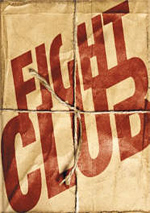
Fight Club appears in an aspect ratio of approximately 2.40:1 on this single-sided, double-layered DVD; the image has been enhanced for 16X9 televisions. While generally good, the transfer came with a few more issues than I’d like.
For the most part, sharpness seemed positive, as most of the film provided nice clarity. However, more than a few shots appeared a bit soft, an area exacerbated by some notable edge haloes. None of these became severe, but they brought out a lack of definition at times. I witnessed no jagged edges or shimmering, but source flaws were a distraction. Throughout the film, I noticed a smattering of specks, nicks and marks. Again, these weren’t overwhelming, but they became more of a nuisance than I expected.
Colors appeared muted and stylized; they went with a sickly green tint much of the time and often were quite subdued. Within those parameters, they seemed accurate and came across the way I believe they were intended to look. Blacks were deep and rich, but shadows were a bit on the heavy side. Low-light shows could be somewhat dense; I thought some of this was intentional, but I still felt the image could be less visible than it should be. Overall, this meant the transfer ended up with a “B-“, though the various issues nearly dragged it down to a “C+”.
As for the Dolby Digital EX 6.1 soundtrack of Fight Club, the soundfield seemed broad and well-defined. The audio often could be quite aggressive and provided an encompassing track. All five speakers got a good workout, with unique sounds that went to each channel but that also blended together neatly and largely seamlessly. Club was a "busy" film visually, and the active sound mix complemented the images well.
The quality also appeared solid. Dialogue occasionally betrayed a slight amount of edginess but it usually seemed natural and clear; I had no problems with intelligibility. Music - which mainly came from the score by Dust Brothers - seemed rich and crisp, with all of the techno tracks sounding appropriately deep and lively. Effects were terrific, as they appeared realistic and vivid. The soundtrack displayed fine dynamic range, with clean highs and deep bass. Club offered audio that satisfied.
In terms of extras, Fight Club comes jam-packed with goodies. DVD One features four separate audio commentaries. First up is a track from director David Fincher. He offers a running, screen-specific discussion of how he became involved in the project and aspects of its development, story/character issues and changes from the book, cast and performances, the title sequence, visual elements and effects, editing, and a few other production areas.
Fincher's a veteran of these affairs, and he offers a lot of strong information here. Fincher is more frank about his work than most directors, so we get a nicely unvarnished viewpoint of the film's production. The commentary has more empty spaces than I'd like, but Fincher makes it a compelling piece that’s definitely worth a listen.
For the second commentary, we hear from Fincher and actors Edward Norton, Brad Pitt and Helena Bonham Carter. The three men were recorded together - though it sounded like a few comments came from solo interviews - and Bonham Carter was taped on her own. Though a few other production topics appear as well, this one concentrates mostly on performance and character notes.
And it proves quite interesting. The men heavily dominate the piece; I’d guess we only hear from Bonham Carter maybe 10 percent of the time. Her tidbits make a mark, though, as she offers good insights.
As for the guys, they also offer plenty of useful thoughts, and they interact well to make the track move smoothly. I could live without all the praise that comes along for the ride – we often hear how much they like this or that – and the frequent negativity toward certain critics gets old as well; they should just accept some folks didn’t like the movie and leave it at that. Nonetheless, the positive far outweighs the negative in this solid track.
Next we find a commentary from novelist Chuck Palahniuk and screenwriter Jim Uhls, both of whom sit together for a running, screen-specific piece. Through this track, we get notes about the film’s origins and inspirations, story and character issues, the adaptation and changes from the source novel.
Of the four, this track suffers the most from dead air, a lot of gaps occur. These become most noticeable in the third act, but they pop up often during the first 90 minutes as well. The empty spots make the commentary sag on more than a few occasions.
Nonetheless, the discussion remains entertaining. We learn a lot about the genesis of the project and the inspiration for many aspects of it, but we also see the film from an "informed fan" point of view. It sounds like these two weren't in on much of the movie's day-to-day creation - in the DVD's booklet, Palahniuk calls himself a "tourist" during the production period - so they chat about it like above-average Joes. I wish the guys talked more, but at least they make the most of the times when they do speak.
Finally, the fourth commentary relates a variety of information about technical areas. We hear from director of photography Jeff Cronenweth, costume designer Michael Kaplan, production designer Alex McDowell, visual effects supervisor Kevin Haug, and digital animator Richard "Doc" Bailey. As you might expect, this one digs into effects, cinematography, editing, costumes, and set design.
Inevitably, we get repetition here; it’s the fourth track, so some of the same stories appear. It’s also the driest of the bunch, as it digs into more technical elements than the others. Nonetheless, it provides a lot of good details. I think the notes about costumes prove the most intriguing, but everything works pretty well. It’s an enjoyable piece, even though it drags toward the end.
DVD One also includes the THX Optimode to set up your TV. This provides you with information to correctly configure various audio and video aspects of your home theater. I don't think it fully replaces something like Video Essentials, but then again, "Optimode" comes as a free addition to a DVD, so it's clearly a bargain. If you haven't already used Essentials or some similar product, you should find "Optimode" very helpful.
Now to move on to DVD Two, which contains the meat of the supplemental features. This disc divides its goods into five different sections, entitled "Crew", "Work", "Missing", "Advertising" and "Art", respectively. In the following text, I'll go through each sequentially. Because of the sheer volume of material, I won't make subjective comments about each piece; instead, once I've covered it all, I'll provide some general impressions.
Crew: This is the most bland of the sections. It contains a slew of the standard "cast and crew" biographies; we find five entries for actors and 13 listings for crew members. In general, the bios are good, though some are better than others. In any case, nothing terribly exciting appears here.
Work: Here's where things get more interesting. This area splits into three subsections: "Production", "Visual Effects", and "On Location".
"Production":
This portion begins with "Alternate Main Titles", a piece that lets you witness the opening credits in a number of different ways. Using alternate angles, it gives us the unutilized sequence without text, an incomplete preview version, and two editions with differing fonts (called "Strangelove" and "Small Science", respectively). In addition, you can choose from two different audio tracks: the main title theme, and an alternate main title theme. The piece runs for one minute and 35 seconds, so we're talking 12 minutes and 40 seconds total if every option is pursued to its end. "AMT" also includes "Brain Ride Map", a collection of 34 stillframes that show production art, drawings and notes about the segment.
"Airport" provides two video segments, "Location Scout" and "Principal
Photography", plus three audio tracks; the first two are the natural audio from the material, while the third incorporates commentary from Fincher. The two video pieces can be watched separately or at the same time through a split-screen method; if you choose the latter, you have to pick one of the two audio tracks. (For a bizarre experience, select the wrong audio!) Each segment runs for two minutes and 10 seconds, so all in all, that gives us six minutes and 30 seconds total. We also find a stillframe area with eight storyboards.
"Jack's Condo" duplicates the options for in "Airport", with two different video segments and three audio tracks, plus the ability to watch both pieces simultaneously via split-screen. One nice touch: when Fincher tells the crew what he wants to happen for various segments, an inset box with the relevant film footage or other video material appears. (This accompanies many of the other parts as well, but I won't comment on it again - you can assume that if such a feature makes sense within the video, it will appear.) Each piece goes for two minutes and 50 seconds, so that's a total of eight minutes and 30 seconds. In addition, 23 frames worth of storyboards appear.
"Paper Street House" differs a little from the preceding template; instead of "Location Scout", we get "Pre-production Designing and Building the House" plus the "Principal Photography" segment. The split-screen option remains, but we find no commentary. On their own, the clips last five and a half minutes for 11 minutes all in all.
"Projection Booth" reverts to the same "Location Scout" and "Principal
Photography" method and also includes the split-screen view, but no commentary appears. Each part takes two minutes, so that's a grand total of four minutes of material. We also find 11 frames of storyboards.
"Corporate Art Ball" puts both "Location Scout" and "Principal Photography" in the same piece and offers something different for the second angle: "Pre-visualization, raw footage, digital effects". The corresponding natural audio goes with the first one, while the second provides an audio commentary from special effects supervisor Kevin Haug and special effects coordinator Cliff Wenger. Each segment lasts three minutes and 55 seconds for a sum of seven minutes and 50 seconds. This part also tosses in 12 storyboards and completes the "Production" subsection.
"Visual Effects":
Its first piece addresses the "Main Titles" and provides video footage of the computer effects in progress. For the audio, you can choose from two different commentary tracks; one from Kevin Haug and the other from visual effects supervisor Kevin Mack. The video lasts two minutes and 55 seconds, for a total of six minutes and 50 seconds possible. It also repeats the "Brain Map" seen
"Furni Catalog" examines that scene's effects. The only audio option is a commentary from Haug, and the piece runs two minutes and 20 seconds. We also get nine screens of storyboards.
"Ice Cave/Power Animal" provides some principal photography shots plus details of the computer generated penguin. The "PP" footage uses raw sound from the set, while the CGI is accompanied by more commentary from Haug. It lasts three minutes and 15 seconds and the section also includes seven storyboards.
<
The cool CG first-person technique called "Photogrammetry" comes next. The video shows lots of raw effects and features additional commentary from Haug. The program runs for three minutes and 30 seconds and tosses in eight storyboards as well.
"Mid-air Collision" discusses the sequence that most startled me, sound-wise through video footage of a "Previsualization Session" plus some basic CG effects. This includes some raw audio plus comments from Haug on one track and Mack and Wenger on the other. The piece lasts four minutes and 40 seconds, for a possible total of nine minutes and 20 seconds. No storyboards this time.
"Sex Sequence" examines the creation of that scene through some CG imagery and is accompanied by a commentary from Haug. The piece lasts two minutes and 35 seconds and it also includes seven storyboards.
"Car Crash" mainly offers principal photography footage of that segment, and it also tosses in brief glimpses of CG through inset boxes. The piece can be viewed with its natural audio or with a commentary from Wenger. It lasts three minutes and 50 seconds for a possible total of seven minutes and 40 seconds and the area also features 40 storyboards.
"Gun Shot" also mixed principal photography and examinations of the computer effects. The three-minute program provides some raw sound but mainly offers commentary from Haug. No storyboards appear.
Finally, "High Rise Collapse" shows production footage and various states of computer effects, and it's accompanied by commentary from Haug and "Doc" Bailey. It runs for four minutes and 40 seconds, and it also doesn't include any storyboards.
"On Location":
This portion completes the "Work" domain with one five minute and 25 second compendium of various shots from the set and other areas. We see sights such as Meat Loaf putting on and testing his fat suit, Pitt getting a head cast made and practicing fighting, and demonstrations of the liposuctioned fat. All of the audio comes straight from the source.
All told, if you watch all of the materials available in the Work area, you'll spend about 95 and a half minutes doing so. That doesn't include the time it takes to examine the 159 stillframes.
Missing: No, this section doesn't feature the 1982 Sissy Spacek/Jack Lemmon film; it includes seven different deleted scenes. Most of these are actually alternate versions or different edits of existing scenes; for example, one offers a different line of dialogue from Bonham Carter. In all cases, the segments show the alternate version and also the final one from the film. Two snippets also included some "behind the scenes" footage as well. Each of the sections ranges from 30 seconds up to three minutes and 15 seconds; all of the pieces together - including the "behind the scenes" stuff - run for about 17 and a half minutes.
One nice touch: when you select each of the deleted scenes, a snippet of text appears that explains why the material was altered or removed. Due to notes in the commentaries, I already knew why a lot of these changes were made, but I still really appreciated the additional information.
Advertising: Here's where we find all of the materials used to promote the film. The section includes the movie's teaser and its theatrical trailer, plus another teaser called "The Eight Rules of Fight Club"; that one was unused and appears here exclusively. We also get 12 US TV spots, two international TV ads, and three Spanish ones. Unfortunately, the latter aren't dubbed; we hear a narrator on two of them but the film's dialogue appears via subtitles. At least we get to see a bar of soap that says "El Club De La
Pelea"!
"PSAs" features two "Public Service Announcements". One is from Jack/Norton, the other from Tyler/Pitt. Each offers the usual pre-movie information we've heard so many times (don't talk, know where the fire exit is, etc.) but they add their little twists.
Next is a music video from the Dust Brothers. On the surface, this appears to be the standard "montage of film clips" piece, but it does have some differences. For one, it features a unique voice-over from Pitt, who exclaims the usual Durdenisms but adds some I didn't recognize. It also hasn't been altered for TV, so it's an "R"-rated video. Ultimately, it's not much more than a glorified trailer, but it's not bad.
Speaking of "glorified trailers", the "Internet Spots" section includes five brief ads that feature material not seen elsewhere. Essentially, these combine film footage with "talking to the camera" clips of Norton shot just for these ads.
The "Promotional Gallery" includes a variety of materials. "Lobby Cards/Advertising" includes 20 frames of promotional photos and posters, while "Press Kit" replicates the film's unique publicity brochure; the kit appeared as if it were a catalog similar to those upscale deals lampooned in the film. We see a pretty good sampling of the kit through these 34 frames. Finally, "Stills" provides 155 photos from the production.
The last piece in this section is an "Edward Norton Interview". This offers a text transcript of an appearance he made at Yale in October 1999. It's not a terrifically long interview, but it covers some interesting material.
Art: The final section includes a lot more stillframes. "Storyboards" replicates each and every storyboard created for the film. It does so in a whopping 267 frames, each of which offers up to four storyboards. (While this presentation makes each 'board harder to see, it allows for much easier navigation, so I appreciate it.) Text at the start helpfully tells us that some scenes weren't storyboarded so we won't find them. We also get a nice index that lets us jump ahead 30 pages of 'boards at a time, which also should be helpful.
"Visual Effects Stills" offers 17 frames worth of "behind the scenes" pictures and details of some effects. "Paper Street House" presents 45 stills that show various shots of the interior and exterior of that building. Oddly, the first eight frames go by on their own without the usual "frame advance" input required, while the remaining 37 must be changed manually. I don't know if this is an authoring error or intentional, but it seems odd.
"Costumes and Makeup" includes 22 more frames. Some of these feature sketches of costume designs, while the rest depict various ideas for injury makeup. A"Pre-production paintings" area includes 50 frames worth of conceptual artwork. Finally, the "Brain Ride Map" again offers the same piece also available in the two previous sections that discussed the main titles.
With that, we finish the supplemental features proper. However, a few
Easter Eggs also can be discovered. In the "Advertising" section on DVD Two, if you press your remote's "down" arrow three times, a "smiley face" will appear. Click it and you can browse through the "Fight club Collection", a catalog of actual promotional items done up in the same manner as the press kit.
DVD One features two hidden features. First is a message from "Tyler Durden" that appears as the third warning at the start of the disc; it's not your standard FBI threat. (While it's interesting, I don't like the fact I can't skip it or the other two screens.) Finally, if you highlight "Special" on the main menu and then press "up" on your remote, you'll find another "smiley face". Click it to see some credits for the DVD.
Finally, Fight Club includes one of the best DVD booklets I've seen. "How to Start a Fight" is a 20-page document that includes lots of photos and some great text about the film. Amazingly, it largely avoids the repetition of already-heard information as most of the quotes come from folks who didn't participate in the other materials (executives at Fox, other producers, etc.) and also includes a wide variety of snippets from reviews of the movie. In keeping with its tone, we find all kinds of opinions - good and bad - which is a surprise. (Although the really gutsy move would have been to print some of the negative reactions on the outside of the package, where prospective purchasers can see them.)
Speaking of the packaging, Fight Club offers an unusual set. A cardboard slipcase holds another case which contains the two DVDs and the booklet. It's a tri-fold affair; it opens to reveal disc-holders in the middle and on the right, and a sleeve for the booklet on the left. All six pieces of cardboard are festooned with artwork and slogans. I have fears for the durability of this package, though I guess it's no less stable than a snapper case. In any event, it's a cool little situation.
Whew! After more than nine hours of audio commentaries and more than four hours spent checking out the other supplements, I'm exhausted! Fight Club provides a very extensive set of supplemental materials, and most of the pieces are very good. I greatly enjoyed the video clips in the Work area because I love that kind of raw,
taken-from-the-set stuff. Nothing better shows the reality of making movies. Work definitely presents the standout section here.
The rest are also good. I admit I hoped for more extensive deleted scenes in Missing; we don't find all that much footage once already-included shots are assessed. Still, I was happy to see the scenes. Advertising pretty neatly documents that area of the process, and "Art" did a nice job of relating that information (though I'm a bit worn out from all the advancing of still frames).
Quibbles? I must acknowledge that I would have liked a nice documentary to provide a general overview of the filmmaking process, mainly because this could have provided more organized and coherent interviews with the principles. We certainly hear a lot from them during the four audio commentaries, but a more formal interview situation might have better organized and directed their thoughts. I also was disappointed that one shot in which Norton gets tapped by a bus (which he mentions during the commentary) doesn't appear, though I seem to recall that Fincher stated it may not have been available.
As a film, I like Fight Club. Though I remain surprisingly dispassionate about it, I definitely am much closer to the side that loves it than the ones who hate it. The DVD’s audio and extras are top-notch, but picture quality borders on mediocre. Despite that drawback, this remains a very good release for an interesting flick.