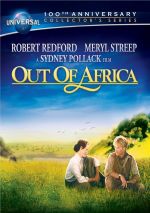
Out of Africa appears in an aspect ratio of approximately 1.85:1 on this Blu-ray Disc. While it came with positives, the image suffered from more issues than expected.
Sharpness became a concern. Significant parts of the movie brought fairly good delineation but processing choices robbed the film of consistently positive definition.
No issues with jaggies or shimmering occurred but I saw light haloes at times. While print flaws remained absent, a layer of grain reduction tended to render the movie flat and too smooth at times.
Though not consistently, as daytime exteriors fared better in that regard, whereas interiors tended to seem more impacted. Those could appear clumsy.
Colors fared better, as the film’s largely natural palette showed some warm and vivid hues. Flesh tones occasionally seemed too pink but in general, the colors worked fine.
Blacks seemed reasonably deep and firm, while shadows never became too opaque. Despite a mix of strengths, the excessive processing made this a less than “film-like” presentation too much of the time.
At least the film's DTS-HD MA 5.1 soundtrack worked pretty well for its era. The forward soundstage appeared pretty well-defined, with much stereo activity occurring.
All three front channels offered some nicely spaced and separated audio. The surrounds were more limited, but the rear channels provided adequate reinforcement for the front and they could become rather active at times.
Quality of the audio was also pretty good for its age. Dialogue was easily intelligible and fairly natural; a little reediness occurred, but the lines usually worked well.
Effects and music showed some roughness, but they had fairly nice range and heft. Nothing here dazzled, but the mix was above average given its era.
How did this remastered 2012 Blu-ray compare to those of the original BD from 2010? Both came with identical audio.
As for the visuals, the 2012 scan offered superior delineation, colors and blacks while it lost the print flaws of its predecessor. While the remaster definitely provided an upgrade over the lousy 2010 release, it still failed to present the movie at its best.
When we move to the extras, first comes an audio commentary from director Sydney Pollack. He presents a running, screen-specific discussion.
Pollack covers a nice variety of subjects, from historical facts to location issues to many facets behind both the technical and the creative sides of the production. We learn about casting and performances, casting and sets, and many other topics.
The track does suffer from a fair number of gaps, but these become somewhat forgivable due to the length of the film and also because most of Pollack's comments seem compelling. He repeats himself a couple of times but generally provides a lot of useful and illuminating information about the film.
More of the same appears in Song Of Africa, a one-hour, 12-minute and 45-second documentary. We see interviews with Pollack, actor Meryl Streep, composer John Barry, screenwriter Kurt Luedtke, and biographer Judith Thurman.
We also witness some brief interviews from the set itself - all with Pollack - plus some documentary footage from real life.
“Song” discusses historical aspects of the story, sets and locations, cast and crew, characters and performances, shooting in Africa, the score, and a few other production elements.
Inevitably, it repeats some info from Pollack’s commentary, but the historical perspective adds a lot. I also like Streep’s comments, largely because she’s a very entertaining storyteller. Though it’s too bad more participants don’t appear, this ends up as a solid program.
A few other supplements round out the package. The film's theatrical trailer appears, complete with cheesy, tres-Eighties synthesizer score.
I guess John Barry's work wasn't ready yet, but still! With the terrible music featured in the trailer, it's a miracle anyone went to see the movie.
We end with 15 minutes, two seconds of Deleted Scenes. The set includes 19 of these, which means you shouldn’t expect anything extended from them.
Virtually all of them provide brief snippets that act as minor character embellishments. Given the theatrical cut’s already extended running time, I can’t find anything here that I’d consider to be worth adding, so these feel like pretty forgettable little tidbits.
Exclusive to this 2012 release, the disc comes packed in a Digibook case that includes photos, production notes and archival materials. It adds flavor to the set.
While I can't whole-heartedly recommend Out Of Africa, I can't really steer you away from it either. No, the film doesn't do a lot for me, but I can understand why a lot of others like it and why it became so successful. The Blu-ray presents good audio and some nice supplements along with decent but inconsistent visuals. Although this 2012 remaster improves upon the ugly picture quality of the original 2010 BD, it still falls short of expectations.