Reviewed by Colin Jacobson (February 25, 2026)
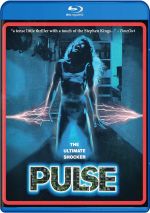
During the 1980s, we got horror movies that used a variety of villains. For 1988’s Pulse, electricity itself becomes the threat.
Set in Southern California, divorcee Bill Rockland (Ciff De Young) is now married to new wife Ellen (Roxanne Hart). Bill’s pre-teen son David (Joey Lawrence) lives in Colorado with his mom and he comes to visit Bill and Ellen.
When David stays home alone, weird and violent antics occur related to the TV and other appliances. Elderly and seemingly crazy “Old Man” Holger (Bill Tyner) relates that a threatening spirit inhabits the electrical current, but David struggles to get his dad to believe him despite an increasing number of mishaps.
With a story about a mysterious force that inhabits a house and creates havoc with appliances, the plot to Pulse sounds reminiscent of 1982’s classic Poltergeist. Indeed, I must imagine the 1988 film used its 1982 predecessor as an influence at minimum.
Given that Pulse also deals with the ways in which a lonely boy works through the divorce of his parents, another 1982 flick feels like it played a part in this one’s story. While the similarities with ET the Extra-Terrestrial seem less obvious compared to those from Poltergeist, I still think they exist.
Wes Craven would explore a similar topic in 1989’s Shocker, a flick in which an electrocuted killer uses voltage as a weapon. That one went for a darker “R”-rated vibe than the “PG-13” Pulse.
Indeed, much of Pulse plays as a drama about the ruptured family and the manner in which this impacts young David. The plot related to the deadly electrical menace takes a fair amount of time to develop.
In theory, I applaud this “slow boil”. Too many horror flicks lack patience and throw cheap scares at the audience early.
Although I do prefer the approach seen in Pulse, I think the movie dawdles a bit too much. The scenes that develop David’s emotions and strains with his father don’t become much more than windowdressing.
This seems especially true because we know where the story will go. Although Pulse superficially opens the notion that David misinterprets common occurrences because urban legends spook him, but the film doesn’t really leave this as a viable possibility.
Though writer/director Paul Golding does his best to sell the notion that David simply misinterprets the actions of everyday household appliances. Much of the movie shows these gadgets through youthful eyes and makes them look scary.
Nonetheless, I couldn’t help but become a bit impatient for the plot to formally move where we knew it would go. Some “mystery” works for a while but this gets stale before long and Pulse takes too long to get where it needs to go.
Still, I’ll take the slow and steady approach of Pulse over the more common lack of subtlety in modern horror. Although the idea of Pulse works better than the execution, the film remains moderately engaging.